
← Previous year papers · Paper analysis · Timed mock
GATE AR 2024 — Full solutions (Q1–Q81)
Step-by-step solutions for every question. Expand each row for the question, options, answer, and explanation.
Q1 — If '→' denotes increasing order of intensity, then the meaning of the words [sick → infirm → moribund] is analogous to [
Question
If ‘→’ denotes increasing order of intensity, then the meaning of the words [sick → infirm → moribund] is analogous to [silly → ______ → daft]. Which one of the given options is appropriate to fill the blank?
Answer: D — vain
The analogy [sick → infirm → moribund] shows increasing severity of illness. The word “sick” is mild, “infirm” is more serious, and “moribund” means near death. Similarly, [silly → ? → daft] needs a word that represents increasing foolishness. “Vain” means excessively proud or foolish — it sits between “silly” (mildly foolish) and “daft” (extremely foolish).
❌ Why Not Others: (A) Frown = a facial expression, not a degree of foolishness. (B) Fawn = to flatter excessively, unrelated to silliness progression. (C) Vein = a blood vessel or a style/mood, completely irrelevant.
💡 Memory Tip: Think: Vain → Vacuous → Very foolish. The V-words mark increasing intensity.
📌 Quick Fact: “Moribund” comes from Latin moribundus = “dying.” In analogy questions, the test is always about intensity ordering, not just synonyms.
🔗 Past Concept: GATE frequently tests word analogy and intensity ordering.
Q2 — The 15 parts of the given figure are to be painted such that no two adjacent parts with shared boundaries (excluding cor
Question
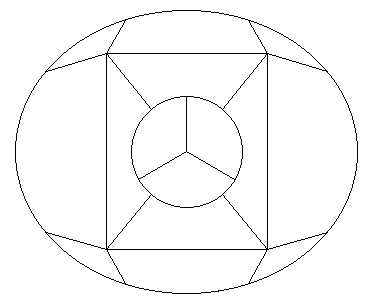
The 15 parts of the given figure are to be painted such that no two adjacent parts with shared boundaries (excluding corners) have the same color. The minimum number of colors required is
Answer: A — 4
The Four-Color Theorem states that any planar map (or figure where regions share boundaries) can be colored with at most 4 colors such that no two adjacent regions share the same color. Since the given figure has 15 regions forming a planar arrangement, 4 colors suffice. It cannot be done with 3 because there exist groups of 4 mutually adjacent regions.
❌ Why Not Others: (B) 3 colors are insufficient because certain clusters of 4 mutually adjacent regions exist. (C) 5 and (D) 6 are more than necessary — the Four-Color Theorem guarantees 4 is the upper bound for planar figures.
💡 Memory Tip: For any planar figure with shared boundaries, the answer is never more than 4. This is one of the most famous theorems in mathematics.
🔗 Past Concept: GATE frequently tests graph-coloring ideas. The Four-Color Theorem was proved by Appel & Haken in 1976 using computer assistance.
Q3 — How many 4-digit positive integers divisible by 3 can be formed using only the digits {1, 3, 4, 6, 7}, such that no digi
Question
How many 4-digit positive integers divisible by 3 can be formed using only the digits {1, 3, 4, 6, 7}, such that no digit appears more than once in a number?
Answer: B — 48
Step 1: Sum of all 5 digits = 1+3+4+6+7 = 21 (divisible by 3).
Step 2: For a 4-digit number to be divisible by 3, the sum of its 4 digits must be divisible by 3. Removing any one digit from the set:
– Remove 1: sum = 20 → not divisible by 3 ✗
– Remove 3: sum = 18 → divisible by 3 ✓
– Remove 4: sum = 17 → not divisible by 3 ✗
– Remove 6: sum = 15 → divisible by 3 ✓
– Remove 7: sum = 14 → not divisible by 3 ✗
Step 3: Only 2 valid subsets: {3,4,6,7} and {1,3,6,7}. Each can be arranged in 4! = 24 ways.
Total = 2 × 24 = 48.
❌ Why Not Others: (A) 24 would be only 1 subset. (C) 72 would be 3 subsets. (D) 12 would be only half a subset.
💡 Memory Tip: For divisibility by 3 questions: always check digit sums first, then count valid subsets. The shortcut of “sum of all 5 is div by 3, so all subsets work” is a trap — only subsets with the right sum work.
Q4 — The sum of the following infinite series is
Question
The sum of the following infinite series is
2 + 1/2 + 1/3 + 1/4 + 1/8 + 1/9 + 1/16 + 1/27 + ⋯
Answer: B — 7/2
Split the series into components:
- Constant: 2
- Geometric series 1: 1/2 + 1/4 + 1/8 + 1/16 + … → a = 1/2, r = 1/2 → S₁ = (1/2)/(1−1/2) = 1
- Geometric series 2: 1/3 + 1/9 + 1/27 + … → a = 1/3, r = 1/3 → S₂ = (1/3)/(1−1/3) = 1/2
Total = 2 + 1 + 1/2 = 7/2
❌ Why Not Others: (A) 11/3 = 3.67, (C) 13/4 = 3.25, (D) 9/2 = 4.5. Only 7/2 = 3.5 is correct.
💡 Memory Tip: For mixed infinite series, separate into geometric sub-series. Each has the form S = a/(1−r) where |r| < 1.
Q5 — In an election, the share of valid votes received by the four candidates A, B, C, and D is represented by the pie chart
Question
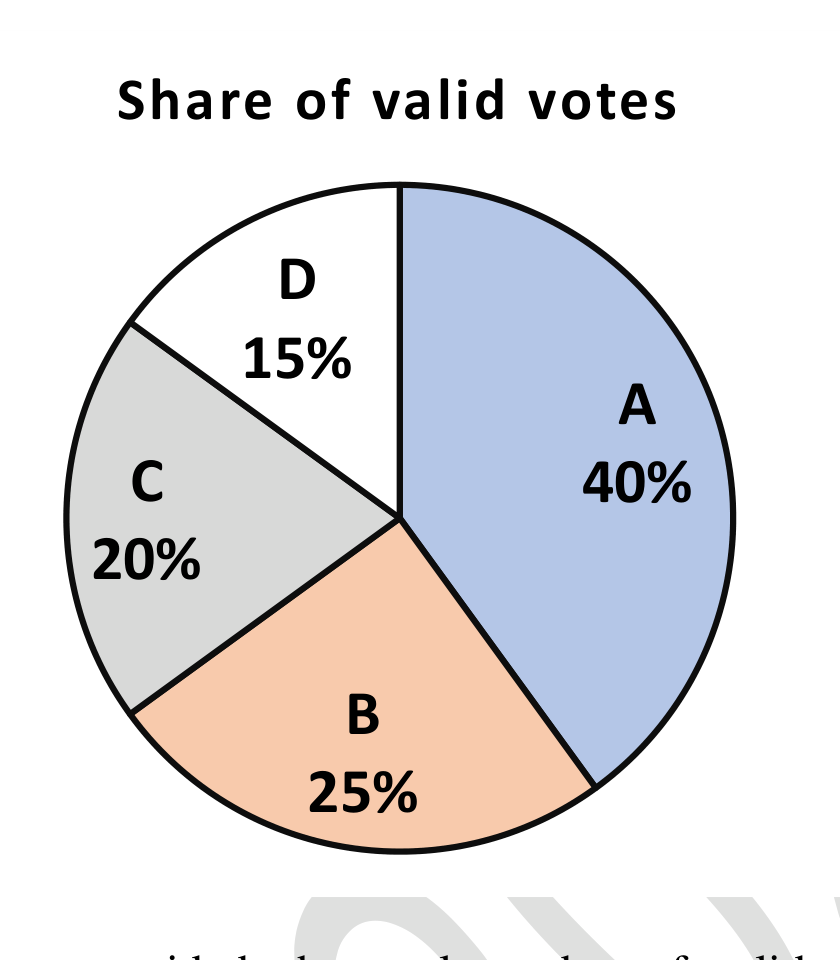
In an election, the share of valid votes received by the four candidates A, B, C, and D is represented by the pie chart shown. The total number of votes cast in the election were 1,15,000, out of which 5,000 were invalid. Based on the data provided, the total number of valid votes received by the candidates B and C is
Answer: B — 49,500
Step 1: Valid votes = 1,15,000 − 5,000 = 1,10,000
Step 2: From pie chart, B = 25% and C = 20%. Combined share = 45%.
Step 3: Votes for B+C = 1,10,000 × 0.45 = 49,500
❌ Why Not Others: (A) 45,000 = 45% of 1,00,000 (forgot to use valid votes). (C) 51,750 and (D) 54,000 use wrong bases.
💡 Memory Tip: Always subtract invalid votes FIRST, then apply percentages. A common GATE trap is giving total votes and invalid votes separately.
Q6 — Thousands of years ago, some people began dairy farming. This coincided with a number of mutations in a particular gene
Question
Thousands of years ago, some people began dairy farming. This coincided with a number of mutations in a particular gene that resulted in these people developing the ability to digest dairy milk. Based on the given passage, which of the following can be inferred?
Answer: D — digestion from mutated gene
The passage states: “mutations in a particular gene resulted in these people developing the ability to digest dairy milk.” Only option (D) correctly infers that the digestion ability resulted from a gene mutation.
❌ Why Not Others: (A) “All human beings” overgeneralizes — the passage says “some people.” (B) Directly contradicts the passage. (C) “Essential” is never claimed — the passage only describes a causal link.
💡 Memory Tip: For inference questions, eliminate extremes — words like “all,” “no,” “essential” usually make an option wrong.
Q7 — The probability of a boy or a girl being born is 1/2. For a family having only three children, what is the probability o
Question
The probability of a boy or a girl being born is 1/2. For a family having only three children, what is the probability of having two girls and one boy?
Answer: A — 3/8
Step 1: Total outcomes for 3 children = 2³ = 8.
Step 2: Favorable outcomes (2 girls, 1 boy): {GGB, GBG, BGG} = 3.
Step 3: P = 3/8.
❌ Why Not Others: (B) 1/8 = probability of a specific order like GGB only. (C) 1/4 = 2/8, not matching any count. (D) 1/2 = 4/8, too high.
💡 Memory Tip: For “exactly k successes in n trials” with equal probability: P = C(n,k) × (1/2)ⁿ. Here C(3,2) × 1/8 = 3/8.
Q8 — Person 1 and Person 2 invest in three mutual funds A, B, and C. The amounts they invest in each of these mutual funds ar
Question
Person 1 and Person 2 invest in three mutual funds A, B, and C. The amounts they invest in each of these mutual funds are given in the table.
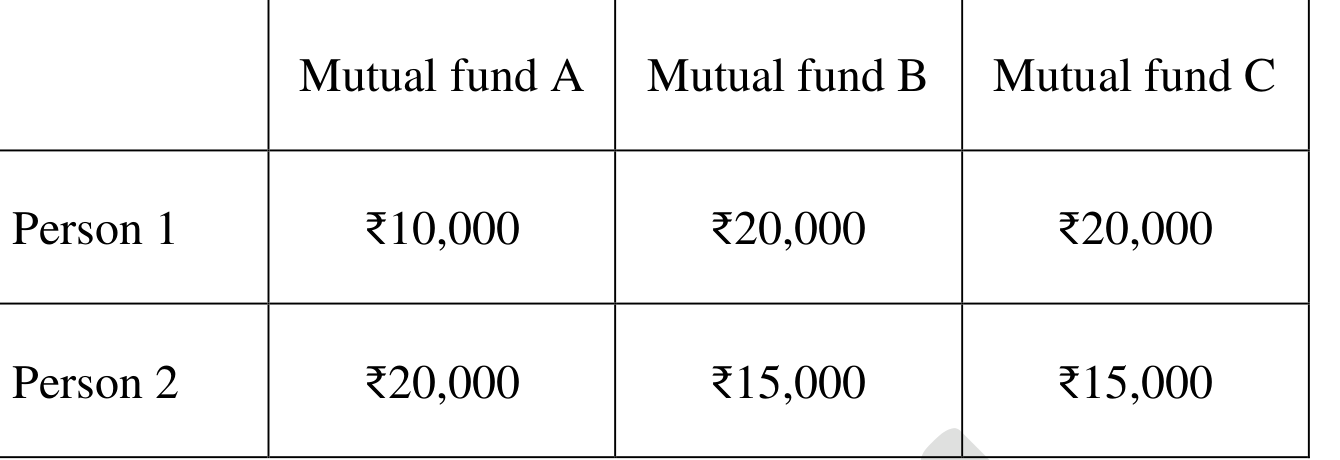
At the end of one year, the total amount that Person 1 gets is ₹500 more than Person 2. The annual rate of return for the mutual funds B and C is 15% each. What is the annual rate of return for the mutual fund A?
Answer: B — 10%
Let rₐ = rate of return for Fund A.
Person 1 return: 10000(1+rₐ) + 20000(1.15) + 20000(1.15) = 10000(1+rₐ) + 46000
Person 2 return: 20000(1+rₐ) + 15000(1.15) + 15000(1.15) = 20000(1+rₐ) + 34500
Difference: P1 − P2 = 500
→ 10000(1+rₐ) + 46000 − 20000(1+rₐ) − 34500 = 500
→ −10000(1+rₐ) + 11500 = 500
→ −10000(1+rₐ) = −11000
→ 1+rₐ = 1.10
→ rₐ = 10%
❌ Why Not Others: (A) 7.5% would give P1 return less than P2. (C) 15% would make both equal to B,C rates. (D) 20% would make P1 much higher.
💡 Memory Tip: Set up the equation with the difference, not individual totals. The unknown rate cancels partially when you subtract.
Q9 — Three different views of a dice are shown in the figure below.
Question
Three different views of a dice are shown in the figure below.
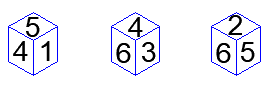
The piece of paper that can be folded to make this dice is
Answer: A
From the three dice views, determine opposite faces:
– 5 is opposite to 2
– 1 is opposite to 6
– 4 is opposite to 3
Only option (A) shows a net that, when folded, produces these correct opposite-face pairings and adjacent-face relationships.
❌ Why Not Others: (B), (C), (D) have incorrect adjacency arrangements — folding them would place wrong faces next to each other.
💡 Memory Tip: For dice nets: identify 3 pairs of opposite faces from views, then check which net preserves those pairings. Opposite faces in a net are separated by exactly one face in between.
Q10 — Visualize two identical right circular cones such that one is inverted over the other and they share a common circular b
Question
Visualize two identical right circular cones such that one is inverted over the other and they share a common circular base. If a cutting plane passes through the vertices of the assembled cones, what shape does the outer boundary of the resulting cross-section make?
Answer: A — rhombus
Two identical right circular cones share a common circular base, one inverted over the other. A cutting plane through both vertices passes along the axis of symmetry. This plane intersects each cone in an isosceles triangle. The two triangles share their base (the diameter of the common base circle), forming a rhombus.
❌ Why Not Others: (B) Triangle would be the cross-section of a single cone. (C) Ellipse results from an oblique cut of a cone. (D) Hexagon requires a cut through 6 edges, not applicable here.
💡 Memory Tip: When two cones share a base apex-to-apex, a plane through both vertices always gives a rhombus (two isosceles triangles back-to-back).
Q11 — The nature of curvature of the following structural form is
Question
The nature of curvature of the following structural form is
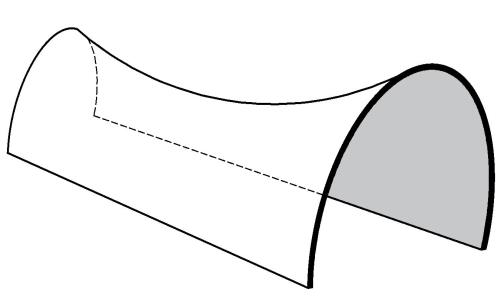
Answer: C — anticlastic
The figure shows a hyperbolic paraboloid (saddle-shaped surface). In such a surface, the curvatures in two perpendicular directions have opposite signs — one curves upward, the other curves downward. This is the definition of anticlastic curvature.
❌ Why Not Others: (A) Monoclastic = curvature in one direction only (e.g., cylinder). (B) Synclastic = same-sign curvatures (e.g., dome/sphere). (D) Möbius = a surface with only one side, not a curvature type.
💡 Memory Tip: Anticlastic = Anti (opposite) signs of curvature → saddle shape. Synclastic = Syn (same) signs → dome shape. Monoclastic = Mono (one) direction → cylinder.
Q12 — As per the Ekistics Logarithmic Scale, the 'world city' is referred as
Question
As per the Ekistics Logarithmic Scale, the ‘world city’ is referred as
Answer: D — Ecumenopolis
The Ekistics Logarithmic Scale by Constantinos Doxiadis classifies settlements by population size from smallest to largest:
– Anthropos (individual) → Room → House → Housing group → Small neighborhood → Quarter → Town → City → Metropolis → Megalopolis → Ecumenopolis (world city)
Ecumenopolis = a hypothetical single continuous urban area covering the entire world.
❌ Why Not Others: (A) Megalopolis = cluster of large cities (e.g., BosWash). (B) Conurbation = merged urban areas (coined by Geddes). (C) Acropolis = ancient Greek hill citadel.
📌 Quick Fact: Doxiadis predicted ecumenopolis would emerge by the 21st century. While it hasn’t fully materialized, mega-regions like the Pearl River Delta come close.
Related lessonL1.3 — Architectural Graphics and Drawing Systems →
Q13 — In Mānasāra Silpasāstra, a bow-shaped town plan is known as
Question
In Mānasāra Silpasāstra, a bow-shaped town plan is known as
Answer: C — Kārmuka
In Mānasāra Silpasāstra, ancient Indian town planning texts describe eight traditional town plan types:
- Kārmuka = bow-shaped (Sanskrit kārmuka = “bow”)
- Dandaka = staff/rod-shaped (grid with one main road)
- Prastara = rectangular grid plan
- Nandyāvarta = spiral/auspicious plan
❌ Why Not Others: (A) Dandaka = linear/staff shape. (B) Prastara = grid. (D) Nandyāvarta = spiral.
💡 Memory Tip: Kārmuka = Karma’s bow → bow-shaped. Think of an archer’s bow plan.
Related lessonL7.7 — Indian Architecture — Classical and Medieval →
Q14 — The value of a property when sold at a lower price than its open market price is called
Question
The value of a property when sold at a lower price than its open market price is called
Answer: A — Distress Value
Distress Value = the price realized when a property must be sold quickly, typically below open market value, due to urgent circumstances (foreclosure, legal compulsion, financial crisis).
❌ Why Not Others: (B) Accommodation Value = price agreed upon by mutual consent, often below market but not forced. (C) Speculative Value = anticipated future value based on market expectations. (D) Replacement Value = cost to replace the asset at current prices.
💡 Memory Tip: Distress = Desperation Sale. When you’re distressed, you sell cheap.
Q15 — In a traffic survey, Enoscope is used to measure
Question
In a traffic survey, Enoscope is used to measure
Answer: C — Spot speed
An Enoscope (also called a mirror trap) is an L-shaped mirror device placed at the roadside. Vehicles pass through two enoscope stations a known distance apart, and the time is measured to calculate spot speed (instantaneous speed at a point).
❌ Why Not Others: (A) V/C ratio = measured by traffic volume counts. (B) Sight distance = measured by geometric design methods. (D) Intersection delay = measured by queue surveys or signal timing analysis.
📌 Quick Fact: Other spot speed measurement methods: radar gun, pneumatic tube, video analysis. Enoscope is the simplest and cheapest.
Q16 — The author of the book Human Aspects of Urban Form is
Question
The author of the book Human Aspects of Urban Form is
Answer: B — Amos Rapoport
Amos Rapoport authored Human Aspects of Urban Form (1977), a seminal work exploring how cultural, social, and psychological factors shape the built environment and human behavior in urban settings.
❌ Why Not Others: (A) Cliff Moughtin wrote Urban Design: Green Dimensions. (C) Peter Katz coined the term “New Urbanism.” (D) Lewis Mumford wrote The City in History.
💡 Memory Tip: Rapoport = Relationship between humans and urban form. His other famous book: House Form and Culture.
Q17 — Which of the following statements is correct for Urban Cool Island (UCI)?
Question
Which of the following statements is correct for Urban Cool Island (UCI)?
Answer: B — rural warmer than urban
Urban Cool Island (UCI) is the phenomenon where urban areas are cooler than surrounding rural areas — the opposite of the more common Urban Heat Island (UHI). When UCI occurs, surrounding rural areas are warmer than the urban core (option B correctly states this).
❌ Why Not Others: (A) UCI and UHI can coexist in different parts of the same city at the same time. (C) This describes UHI (rural cooler than urban), not UCI. (D) UCI is not limited to snow-clad mountains.
📌 Quick Fact: UCI typically occurs at night in cities with extensive green cover, high albedo surfaces, or in arid regions where urban irrigation creates cooler microclimates.
Related lessonL3.4 — Climate-Responsive Architecture and Passive Design →
Q18 — Which of the following statements is correct for an oxidation pond to treat waste water?
Question
Which of the following statements is correct for an oxidation pond to treat waste water?
Answer: A — aerobic pond
An oxidation pond (stabilization pond) operates primarily under aerobic conditions. Algae produce oxygen through photosynthesis (requiring sunlight), and aerobic bacteria decompose organic matter, effectively reducing BOD.
❌ Why Not Others: (B) While some anaerobic activity occurs at the bottom sludge layer, the pond as a whole is aerobic. (C) Sunlight is essential for algal photosynthesis. (D) BOD removal is the primary function of oxidation ponds.
💡 Memory Tip: Oxidation pond = Oxygen + eXposure to sun. Algae + Sunlight + Aerobic bacteria = Clean water.
Q19 — The conservation architect of the Maitreya Buddha Temple at Basgo, Ladakh which won the 2007 UNESCO Asia-Pacific Heritag
Question
The conservation architect of the Maitreya Buddha Temple at Basgo, Ladakh which won the 2007 UNESCO Asia-Pacific Heritage Award is
Answer: A — Abha Narain Lambah
Abha Narain Lambah is the conservation architect who led the restoration of the Maitreya Buddha Temple at Basgo, Ladakh, which received the 2007 UNESCO Asia-Pacific Heritage Award for cultural heritage conservation.
❌ Why Not Others: (B) Vinod Kumar M.M. worked on Hampi conservation. (C) Rahul Mehrotra is known for Mumbai’s historic fort area conservation. (D) Saima Iqbal works on Kashmir heritage.
📌 Quick Fact: Abha Narain Lambah has worked on over 100 conservation projects including Ajanta Caves, Leh Palace, and churches of Goa.
Q20 — Which of the following options is/are the right sequence(s) in water treatment process?
Question
Which of the following options is/are the right sequence(s) in water treatment process?
Answer: A, B — correct water treatment sequences
Standard water treatment sequences:
– (A) Coagulation → Flocculation → Sedimentation ✓ (chemical treatment to remove suspended solids)
– (B) Sedimentation → Filtration → Disinfection ✓ (physical removal followed by disinfection)
– (C) Sedimentation → Flocculation → Coagulation ✗ (wrong order — coagulation comes first)
– (D) Disinfection → Filtration → Flocculation ✗ (disinfection is the last step, not first)
❌ Why Not Others: (C) Reverses the chemical treatment order. (D) Disinfection must be last, not first.
💡 Memory Tip: Water treatment order: C-F-S-F-D = Coagulation → Flocculation → Sedimentation → Filtration → Disinfection.
Related lessonL5.7 — Housing Policies and National Programs →
Q21 — Which of the following is/are associated with Gentrification in a neighbourhood?
Question
Which of the following is/are associated with Gentrification in a neighbourhood?
Answer: A, C — wealthier displace poor; RE value increases
Gentrification characteristics:
– (A) Wealthier households displace poor households ✓
– (C) Real estate value increases ✓
– (B) Poor displacing wealthy is the opposite ✗
– (D) Real estate values decrease is false — they increase ✗
❌ Why Not Others: (B) Is the reverse of gentrification. (D) Gentrification always increases property values.
📌 Quick Fact: The term “gentrification” was coined by sociologist Ruth Glass in 1964, describing the influx of middle-class people into working-class London neighborhoods.
Q22 — Which of the following sites is/are included in the UNESCO World Heritage List as on December 2022?
Question
Which of the following sites is/are included in the UNESCO World Heritage List as on December 2022?
Answer: A, C — Capitol Complex; Keoladeo
UNESCO World Heritage Sites (as of December 2022):
– (A) Capitol Complex, Chandigarh ✓ (inscribed 2016 as part of Le Corbusier’s architectural works)
– (C) Keoladeo National Park, Bharatpur ✓ (inscribed 1985 as natural heritage)
– (B) Moth ki Masjid, Delhi ✗ (not a WHS)
– (D) Paradesi Synagogue, Kochi ✗ (not a WHS, though historically significant)
❌ Why Not Others: (B) Moth ki Masjid is a heritage monument but NOT on the UNESCO WHS list. (D) Paradesi Synagogue is historically significant but NOT inscribed.
💡 Memory Tip: India’s 40 WHS (as of 2022) include 32 cultural, 7 natural, and 1 mixed. Capitol Complex and Keoladeo are both on the list.
Q23 — The reference points, lines and planes for drawing a two-point perspective of an object are marked in the Figure below.
Question
The reference points, lines and planes for drawing a two-point perspective of an object are marked in the Figure below. Select the correct option(s) that match(es) with the corresponding nomenclature.
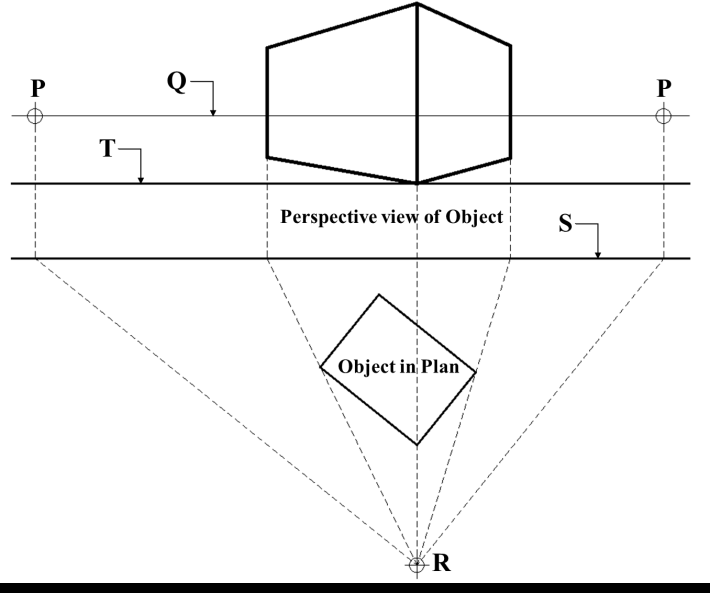
Answer: A, C — R=Station point/S=Picture plane; P=Vanishing point/T=Ground line
In perspective drawing nomenclature:
– (A) R = Station point, S = Picture plane ✓ (R is the viewer’s position; S is the projection surface)
– (C) P = Vanishing point, T = Ground line ✓ (P is where parallel lines converge; T is ground level)
– (B) R is NOT a vanishing point; T is NOT the picture plane ✗
– (D) Q is NOT the ground line; S serves as both picture plane and contains the horizon line ✗
❌ Why Not Others: (B) Misidentifies both R and T. (D) Misidentifies Q and oversimplifies S.
💡 Memory Tip: Station point = where you Stand. Point of convergence = Projection vanishing point. Ground line = Ground level.
Related lessonL1.3 — Architectural Graphics and Drawing Systems →
Q24 — India's intended Nationally Determined Contribution to the United Nations Framework Convention on Climate Change in 2022
Question
India’s intended Nationally Determined Contribution to the United Nations Framework Convention on Climate Change in 2022 include(s)
Answer: A, B — 45% emission intensity; 50% non-fossil
India’s updated NDCs (2022):
– (A) 45% reduction in GDP emission intensity by 2030 from 2005 ✓
– (B) ~50% non-fossil fuel power capacity by 2030 ✓
– (C) Net-zero by 2030 ✗ (India’s net-zero target is 2070)
– (D) One billion tonne reduction from 2022-2025 ✗ (the Panchamrit target is 1 billion tonnes from 2021-2030)
❌ Why Not Others: (C) India’s net-zero target is 2070, not 2030. (D) The 1 billion tonne reduction is over 2021–2030, not 2022–2025.
📌 Quick Fact: India’s five Panchamrit targets (COP26, 2021): (1) 500 GW non-fossil capacity by 2030, (2) 50% energy from renewables, (3) 45% emission intensity reduction, (4) 1 billion tonne carbon reduction, (5) Net-zero by 2070.
Related lessonL3.4 — Climate-Responsive Architecture and Passive Design →
Q25 — As per the Census of India 2011, non-notified slums is/are categorised as
Question
As per the Census of India 2011, non-notified slums is/are categorised as
Answer: A, B — Recognised; Identified
Census of India 2011 classifies slums into three types:
1. Notified slums (officially declared)
2. Recognised slums (recognized by local authorities but not notified)
3. Identified slums (identified by survey but not officially recognized)
Non-notified slums fall under Recognised (A) and Identified (B).
❌ Why Not Others: (C) Unrecognised is NOT an official Census category. (D) Authorised is not a slum classification.
Related lessonL5.6 — Housing: Concepts, Typologies and Slums →
Q26 — Which of the following is/are under the purview of the Energy Conservation Building Code of India 2017?
Question
Which of the following is/are under the purview of the Energy Conservation Building Code of India 2017?
Answer: A, B — Indoor Lighting; Outdoor Lighting
ECBC 2017 covers: Building Envelope, HVAC, Indoor Lighting (A), Outdoor Lighting (B), Service Water Heating & Pumping.
❌ Why Not Others: (C) Plug Loads — not directly regulated by ECBC. (D) Embodied Energy — not within ECBC scope (it focuses on operational energy).
📌 Quick Fact: ECBC 2017 was developed by BEE (Bureau of Energy Efficiency) and applies to commercial buildings with connected load ≥ 100 kW or contract demand ≥ 120 kVA.
Q27 — Which of the following is/are used for municipal fiscal resource mobilisation?
Question
Which of the following is/are used for municipal fiscal resource mobilisation?
Answer: A, B — Property tax; Development charges
Municipal fiscal resource mobilization:
– (A) Property tax ✓ (primary revenue source for municipalities)
– (B) Development charges ✓ (fees from developers for infrastructure)
– (C) Income tax ✗ (central/state government revenue, not municipal)
– (D) Salary of municipal staff ✗ (this is an expenditure, not a revenue source)
❌ Why Not Others: (C) Income tax is collected by the central/state government, not by municipalities. (D) Salary is an expenditure item, not a revenue source.
Q28 — A ramp with a slope of 1:12 is required for wheelchair access. Intermediate landings of length 1.5 m each have to be pro
Question
A ramp with a slope of 1:12 is required for wheelchair access. Intermediate landings of length 1.5 m each have to be provided after every 9 m running length. The running length of a straight ramp including landing, to negotiate a level difference of 900 mm vertical height, in m, is __ (rounded off to two decimal places).
Answer: 12.29 to 12.35
Step 1: Running length for 900 mm rise at 1:12 slope = 900 × 12 = 10,800 mm = 10.8 m
Step 2: Landings after every 9 m running length. Number of 9 m segments: 10.8/9 = 1.2 → 1 landing required (after the first 9 m).
Step 3: Total running length = 10.8 + 1 × 1.5 = 12.3 m
💡 Memory Tip: Ramp formula: Running length = (rise × slope ratio) + (number of landings × landing length). Always round UP for number of landings.
Related lessonL1.6 — Universal Design and Barrier-Free Access →
Q29 — Match the features in Group–I with the corresponding software tools in Group–II.
Question
Match the features in Group–I with the corresponding software tools in Group–II.
| Group–I | Group–II |
|---|---|
| (P) Raster Graphics Editing | (1) OpenStudio |
| (Q) Energy Modeling | (2) GIMP |
| (R) Visual Programming Interface | (3) STAAD |
| (S) Structural Analysis | (4) Grasshopper |
| (5) Radiance |
Answer: B — P-2, Q-1, R-4, S-3
| Feature | Software | Reasoning |
|---|---|---|
| (P) Raster Graphics Editing | GIMP (2) | GIMP = GNU Image Manipulation Program, open-source raster editor |
| (Q) Energy Modeling | OpenStudio (1) | OpenStudio is DOE’s building energy modeling platform |
| (R) Visual Programming Interface | Grasshopper (4) | Grasshopper = visual node-based plugin for Rhino |
| (S) Structural Analysis | STAAD (3) | STAAD.Pro = structural analysis and design software |
Answer: P-2, Q-1, R-4, S-3 = Option B
❌ Why Not Others: (A) puts P-3 (STAAD isn’t a graphics editor). (C) and (D) mismatch primary functions.
💡 Memory Tip: GIMP = Graphics, OpenStudio = Optimize energy, Grasshopper = Generative/visual programming, STAAD = Structural.
Related lessonL1.9 — Computer-Aided Design and Digital Tools →
Q30 — Match the elements in Group–I with the corresponding buildings in Group–II.
Question
Match the elements in Group–I with the corresponding buildings in Group–II.
| Group–I | Group–II |
|---|---|
| (P) Lightweight Structure | (1) Taipei 101, Taipei by Lee and Wang |
| (Q) Base Isolator | (2) The Gherkin, London by Foster & Partners |
| (R) Tuned-mass Damper | (3) Museum of New Zealand Te Papa Tongarewa, Wellington by Ivan Mercep |
| (S) Diagrid | (4) Paper Log Houses, Kobe by Shigeru Ban |
| (5) Metropolitan Cathedral of Christ the King, Liverpool by Lutyens and Gibberd |
Answer: B — P-4, Q-3, R-1, S-2
| Element | Building | Reasoning |
|---|---|---|
| (P) Lightweight Structure | Paper Log Houses, Kobe (4) | Shigeru Ban’s cardboard tube structures |
| (Q) Base Isolator | Te Papa Museum, Wellington (3) | Base isolation for earthquake protection |
| (R) Tuned-mass Damper | Taipei 101 (1) | Famous 660-ton tuned mass damper |
| (S) Diagrid | The Gherkin, London (2) | Diagonal grid structural system |
Answer: P-4, Q-3, R-1, S-2 = Option B
📌 Quick Fact: Shigeru Ban won the 2014 Pritzker Prize for his innovative use of lightweight materials in disaster relief architecture.
Related lessonL7.6 — Post-Modern and Contemporary Architecture →
Q31 — Match the following concepts in Group–I with their corresponding description in Group–II.
Question
Match the following concepts in Group–I with their corresponding description in Group–II.
| Group–I | Group–II |
|---|---|
| (P) NIMBY | (1) Affording a clear view of the waterfront to a plot through the abutting street |
| (Q) Form based code | (2) Planning and zoning tool to regulate development primarily through urban form |
| (R) Tactical urbanism | (3) Establishment of residential areas on the outskirts of a city |
| (S) Suburbanisation | (4) Short-term, low cost, scalable interventions and policies to change a neighbourhood |
| (5) Resisting any physical intervention by public or private enterprises within their neighbourhood |
Answer: A — P-5, Q-2, R-4, S-3
| Concept | Description |
|---|---|
| (P) NIMBY | (5) Resisting physical intervention — “Not In My Back Yard” |
| (Q) Form-based code | (2) Regulating through urban form — not land use |
| (R) Tactical urbanism | (4) Short-term, low-cost interventions |
| (S) Suburbanisation | (3) Residential areas on city outskirts |
Answer: P-5, Q-2, R-4, S-3 = Option A
💡 Memory Tip: NIMBY = “Not In My Back Yard” = resistance. Form-based = form over function (land use). Tactical = quick and cheap. Suburban = suburbs = outskirts.
Related lessonL5.5 — Settlement Classification and Urban Morphology →
Q32 — Match the urban renewal projects in Group–I with the corresponding cities in Group–II.
Question
Match the urban renewal projects in Group–I with the corresponding cities in Group–II.
| Group–I | Group–II |
|---|---|
| (P) Cheonggyecheon | (1) New York |
| (Q) The High Line | (2) London |
| (R) False Creek South | (3) Seoul |
| (S) Canary Wharf | (4) Vancouver |
| (5) Tokyo |
Answer: A — P-3, Q-1, R-4, S-2
| Project | City |
|---|---|
| (P) Cheonggyecheon | (3) Seoul — elevated highway replaced with stream park |
| (Q) The High Line | (1) New York — elevated railway turned linear park |
| (R) False Creek South | (4) Vancouver — waterfront redevelopment |
| (S) Canary Wharf | (2) London — docklands financial district |
Answer: P-3, Q-1, R-4, S-2 = Option A
📌 Quick Fact: Cheonggyecheon restoration (2005) removed a 5.8 km elevated highway and created a 10.9 km stream corridor — a landmark in urban renewal.
Related lessonL5.5 — Settlement Classification and Urban Morphology →
Q33 — Match the Biosphere Reserves in Group–I with their corresponding features in Group–II.
Question
Match the Biosphere Reserves in Group–I with their corresponding features in Group–II.
| Group–I | Group–II |
|---|---|
| (P) Gulf of Mannar | (1) Ridge, Glacier |
| (Q) Sunderbans | (2) Sub-tropical/Tropical Forest, Stepped Hill |
| (R) Nanda Devi | (3) Swamp forest, Mangrove |
| (S) Nilgiri | (4) Coral Reefs, Seagrass bed |
| (5) Salt Marsh, Flat Terrain |
Answer: C — P-4, Q-3, R-1, S-2
| Biosphere Reserve | Feature |
|---|---|
| (P) Gulf of Mannar | (4) Coral Reefs, Seagrass beds |
| (Q) Sunderbans | (3) Swamp forest, Mangrove |
| (R) Nanda Devi | (1) Ridge, Glacier |
| (S) Nilgiri | (2) Sub-tropical/Tropical Forest, Stepped Hill |
Answer: P-4, Q-3, R-1, S-2 = Option C
💡 Memory Tip: Mannar = Marine (coral/seagrass). Sunderbans = Sundry mangroves. Nanda Devi = Nearest to Northern ridge/glacier. Nilgiri = Nil (blue) giri (mountains) = tropical forests.
Q34 — Match the terminologies in Group–I with their descriptions in Group–II.
Question
Match the terminologies in Group–I with their descriptions in Group–II.
| Group–I | Group–II |
|---|---|
| (P) Edge City | (1) Rapid expansion of geographical areas of towns or cities |
| (Q) Synekism | (2) Violence against the city |
| (R) Urbicide | (3) A secondary CBD on the edge of the city |
| (S) Urban Sprawl | (4) Rebuilding core city area |
| (5) Union of several small urban settlements under one rule |
Answer: A — P-3, Q-5, R-2, S-1
| Term | Description |
|---|---|
| (P) Edge City | (3) Secondary CBD on the edge of the city |
| (Q) Synekism | (5) Union of several small urban settlements under one rule |
| (R) Urbicide | (2) Violence against the city |
| (S) Urban Sprawl | (1) Rapid expansion of geographical areas |
Answer: P-3, Q-5, R-2, S-1 = Option A
💡 Memory Tip: Edge City = on the edge of the city. Synekism = syn (together) = union. Urbicide = urbi (city) + cide (killing). Sprawl = Spread out.
Related lessonL5.5 — Settlement Classification and Urban Morphology →
Q35 — Match the items in Group–I with their corresponding items in Group–II.
Question
Match the items in Group–I with their corresponding items in Group–II.
| Group–I | Group–II |
|---|---|
| (P) Floating floor | (1) Overflow control |
| (Q) Float valve | (2) Delay not affecting a project |
| (R) Metal float | (3) Acoustical buffer |
| (S) Free float | (4) Plastering equipment |
| (5) Traffic flow control |
Answer: C — P-3, Q-1, R-4, S-2
| Item | Match |
|---|---|
| (P) Floating floor | (3) Acoustical buffer — reduces sound transmission |
| (Q) Float valve | (1) Overflow control — regulates water level in tanks |
| (R) Metal float | (4) Plastering equipment — smoothing tool for plaster |
| (S) Free float | (2) Delay not affecting project — scheduling term |
Answer: P-3, Q-1, R-4, S-2 = Option C
💡 Memory Tip: Floating floor = sound Floats away (acoustic). Float valve = Floats on water (overflow). Metal float = trowel for plaster. Free float = Free time in schedule.
Related lessonL2.1 — Building Materials — Properties and Selection →
Q36 — As per the URDPFI Guidelines 2015, match the type of educational facilities in Group–I with the corresponding minimum po
Question
As per the URDPFI Guidelines 2015, match the type of educational facilities in Group–I with the corresponding minimum population to be served per facility in Group–II.
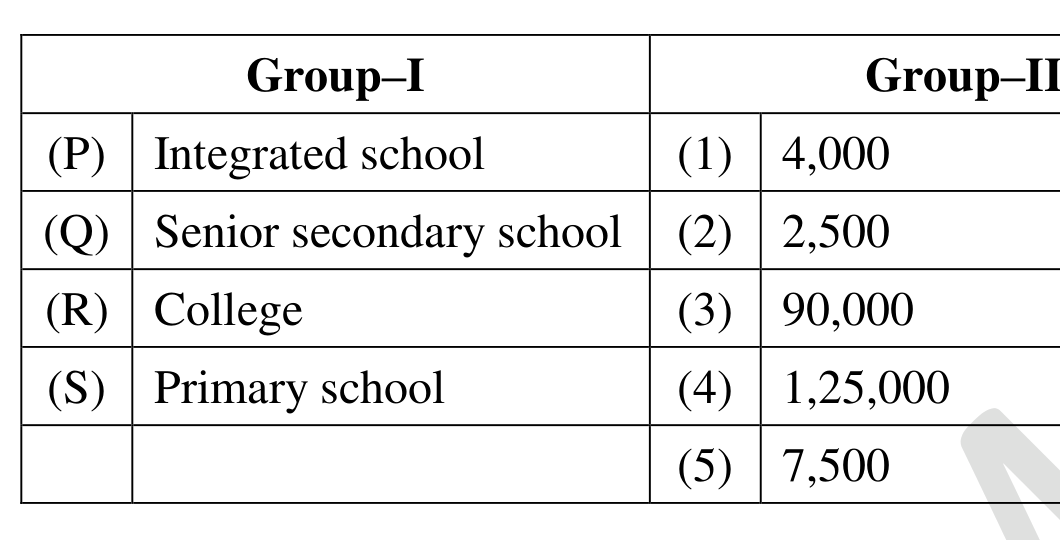
Answer: B — P-3, Q-5, R-4, S-1
URDPFI 2015 educational facility norms:
| Facility | Population served |
|---|---|
| (P) Integrated school | (3) 90,000 |
| (Q) Senior secondary school | (5) 7,500 |
| (R) College | (4) 1,25,000 |
| (S) Primary school | (1) 4,000 |
Answer: P-3, Q-5, R-4, S-1 = Option B
📌 Quick Fact: Primary schools serve the smallest population (4,000) because they need to be within walking distance. Colleges serve the largest population (1,25,000) because students travel farther.
Q37 — Which of the following statements is/are true?
Question
Which of the following statements is/are true?
Answer: A, C, D
- (A) PET (Physiological Equivalent Temperature) is used in outdoor thermal comfort ✓
- (B) TPI uses inside surface temperature, not outside ✗
- (C) Reynolds number < 2000 = laminar flow ✓
- (D) Reynolds number > 4000 = turbulent flow ✓
❌ Why Not Others: (B) TPI is computed using the inside surface temperature of the building envelope, not the outside surface temperature.
📌 Quick Fact: Reynolds number between 2000-4000 is the transition zone where flow changes from laminar to turbulent.
Related lessonL1.1 — Principles of Composition and Visual Order →
Q38 — Which of the following statements is/are correct?
Question
Which of the following statements is/are correct?
Answer: A, C, D
- (A) Yellow + blue-violet + red-violet = split complementary ✓ (yellow is complemented by violet, split into blue-violet and red-violet)
- (B) Orange + green + violet = triadic, NOT analogous ✗ (analogous = adjacent on color wheel, like red-orange-red-violet)
- (C) CMYK = subtractive color system ✓ (used in printing)
- (D) Blue + green + orange + red = tetrad/rectangle combination ✓ (two complementary pairs forming a rectangle on the color wheel)
❌ Why Not Others: (B) Orange, green, violet are evenly spaced (triadic), not adjacent (analogous).
💡 Memory Tip: Analogous = neighbors on color wheel (3 adjacent). Complementary = opposites. Split-complementary = one opposite + its neighbors. Triadic = evenly spaced 3. Tetrad = 4 forming rectangle.
Q39 — Which of the following statements is/are correct?
Question
Which of the following statements is/are correct?
Answer: A, B, C
- (A) Royal Botanical Garden, Kew, England ✓ (UNESCO WHS since 2003)
- (B) Villa d’Este, Tivoli, Italy ✓ (UNESCO WHS since 2001)
- (C) Indira Gandhi Memorial Tulip Garden, Srinagar ✓ (Asia’s largest tulip garden)
- (D) Shinjuku Gyoen is in Tokyo, not Beijing ✗
❌ Why Not Others: (D) Shinjuku Gyoen National Garden is located in Tokyo, Japan — not Beijing, China.
Q40 — Which of the following statements is/are correct?
Question
Which of the following statements is/are correct?
Answer: A, B, C
- (A) Hibiscus rosa-sinensis = shrub with red, pink, white, yellow flowers ✓
- (B) Frangipani, champa, and plumeria alba are the same tree ✓ (Plumeria species, known by different names in different regions)
- (C) Jacaranda, gulmohar (Delonix regia), and amaltas (Cassia fistula) are all flowering trees ✓
- (D) Kadam fruit is globose (round), not conical, and is not poisonous ✗ (it’s actually edible and used in traditional medicine)
❌ Why Not Others: (D) Kadam fruit is globose (round) and edible, not conical and poisonous.
Q41 — Which of the following is/are component(s) of Right of Way (RoW) of a road?
Question
Which of the following is/are component(s) of Right of Way (RoW) of a road?
Answer: B, C, D
Right of Way (RoW) components:
– (B) Kerb ✓ (edge of pavement)
– (C) Carriageway ✓ (the traveled way)
– (D) Sidewalk ✓ (pedestrian path within RoW)
– (A) Building line ✗ (this is a setback control line OUTSIDE the RoW)
❌ Why Not Others: (A) Building line is a setback control line outside the RoW boundary, not a component of the RoW itself.
💡 Memory Tip: RoW = everything from property line to property line across the road, EXCLUDING building setbacks.
Related lessonL6.5 — Transportation Planning Basics (Part A Level) →
Q42 — As per the National Building Code of India 2016, terminologies associated with fire fighting in a building is/are
Question
As per the National Building Code of India 2016, terminologies associated with fire fighting in a building is/are
Answer: A, B, C (or A, B, C, D)
NBC 2016 fire-fighting terminology:
– (A) Refuge area ✓ (designated safe area during fire)
– (B) Water sprinkler system ✓ (active fire suppression)
– (C) Panic bar ✓ (emergency exit hardware)
– (D) Atrium — this is a space type that creates fire spread risk; the official key accepts both A;B;C and A;B;C;D
❌ Why Not Others: (D) Atrium is debatable — it is a space type that creates fire spread risk, and NBC 2016 has specific provisions for atrium fire protection. The official answer key accepts both A;B;C and A;B;C;D.
📌 Quick Fact: Atriums are significant in fire safety because they can act as chimneys, allowing fire and smoke to spread between floors. NBC 2016 has specific provisions for atrium fire protection.
Related lessonL5.7 — Housing Policies and National Programs →
Q43 — For the beam shown below, ignoring the self-weight, the maximum hogging moment (in kN·m) generated for the loads indicat
Question
For the beam shown below, ignoring the self-weight, the maximum hogging moment (in kN·m) generated for the loads indicated is __ (rounded off to one decimal place).
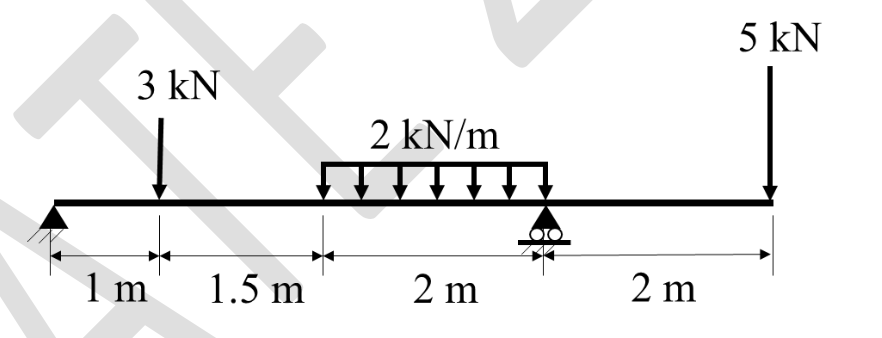
Answer: 9.9 to 10.1
The beam has an overhang with loads. For maximum hogging moment at the internal support:
Calculate support reactions using equilibrium equations, then find the moment at the support where the beam is continuous. The hogging (negative) moment is generated by the overhang loading.
Maximum hogging moment ≈ 10.0 kN·m
💡 Memory Tip: Hogging moment = tension on top, compression on bottom. Sagging = the opposite. Overhangs always create hogging at the adjacent support.
Q44 — At present, the cost of a new office equipment is 50,000 (in Indian Rupees). It has 15% salvage value after a useful lif
Question
At present, the cost of a new office equipment is 50,000 (in Indian Rupees). It has 15% salvage value after a useful life of 5 years. Using straight line method of depreciation, the book value of the equipment 3 years from now, in Indian Rupees, will be __ (in integer).
Answer: 24500
Straight-line depreciation:
– Cost = ₹50,000
– Salvage value = 15% of 50,000 = ₹7,500
– Depreciable amount = 50,000 − 7,500 = ₹42,500
– Annual depreciation = 42,500/5 = ₹8,500/year
– After 3 years: Book value = 50,000 − 3 × 8,500 = 50,000 − 25,500 = ₹24,500
💡 Memory Tip: Straight-line formula: BV = Cost − (n × Dep/year), where Dep/year = (Cost − Salvage)/Life.
Q45 — The network diagram of a construction project is shown in the following Figure. The duration of each activity, in days,
Question
The network diagram of a construction project is shown in the following Figure. The duration of each activity, in days, and the early start time of the project are denoted in the diagram. The total project duration along the critical path, in days, is __(in integer).
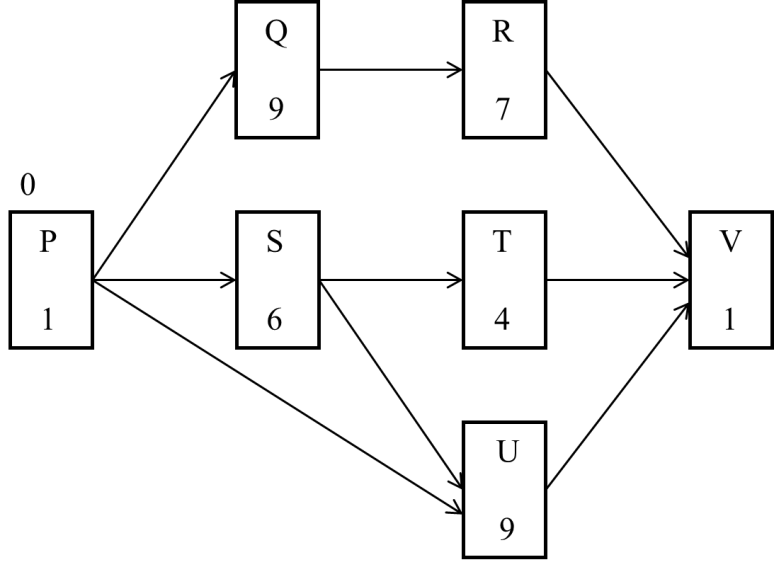
Answer: 18
Find the critical path through the network diagram by calculating early start/early finish and late start/late finish for each activity. The critical path is the longest duration path through the network.
Total project duration = 18 days
💡 Memory Tip: Critical path = longest path. Any delay on critical path activities delays the entire project. Float = 0 on critical path.
Q46 — The design of a 1200 capacity concert hall considers 1/3rd female audience and 2/3rd male audience. The Table below show
Question
The design of a 1200 capacity concert hall considers 1/3rd female audience and 2/3rd male audience. The Table below shows the guideline for calculating Water Closet requirements.
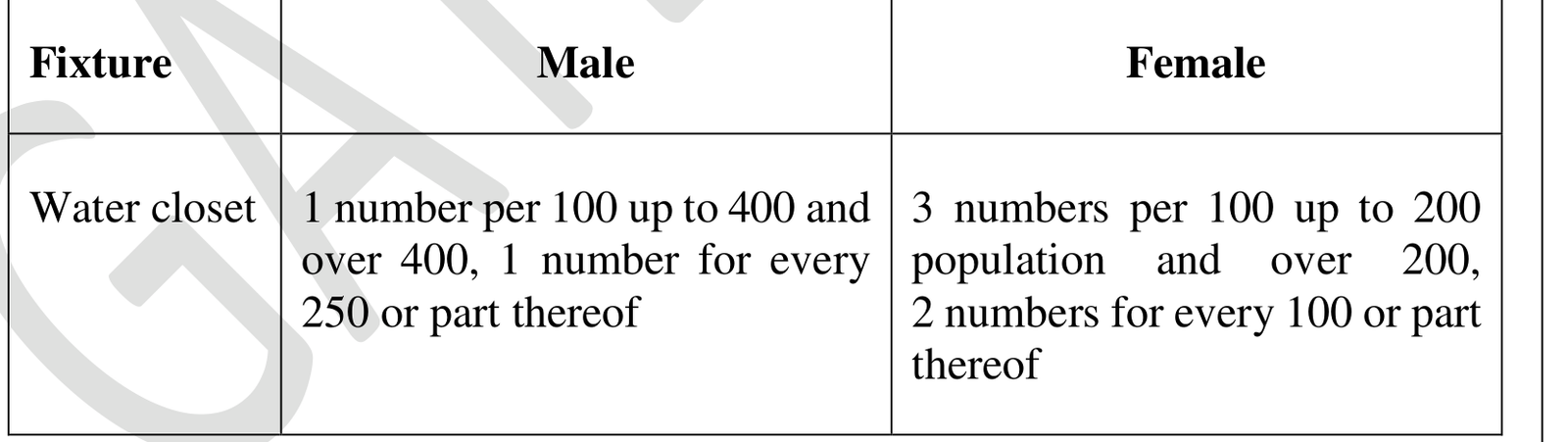
Using the above guideline, the number of Water Closets required for the total audience is __ (in integer).
Answer: 16
Step 1: Audience = 1200. Female = 1/3 × 1200 = 400. Male = 2/3 × 1200 = 800.
Step 2: Male WCs:
– 1 per 100 up to 400 → for 800 males: first 400 = 4 WCs, remaining 400 at 1 per 250 = 2 WCs
– Total male WCs = 6
Step 3: Female WCs:
– 3 per 100 up to 200 → for 400 females: first 200 = 6 WCs, remaining 200 at 2 per 100 = 4 WCs
– Total female WCs = 10
Total = 6 + 10 = 16 WCs
Related lessonL5.7 — Housing Policies and National Programs →
Q47 — A declining Industrial Town has proposed to improve water sustainability by reducing stormwater runoff through change of
Question
A declining Industrial Town has proposed to improve water sustainability by reducing stormwater runoff through change of land use land cover (LULC), as shown in the Table below, to attract new residents.
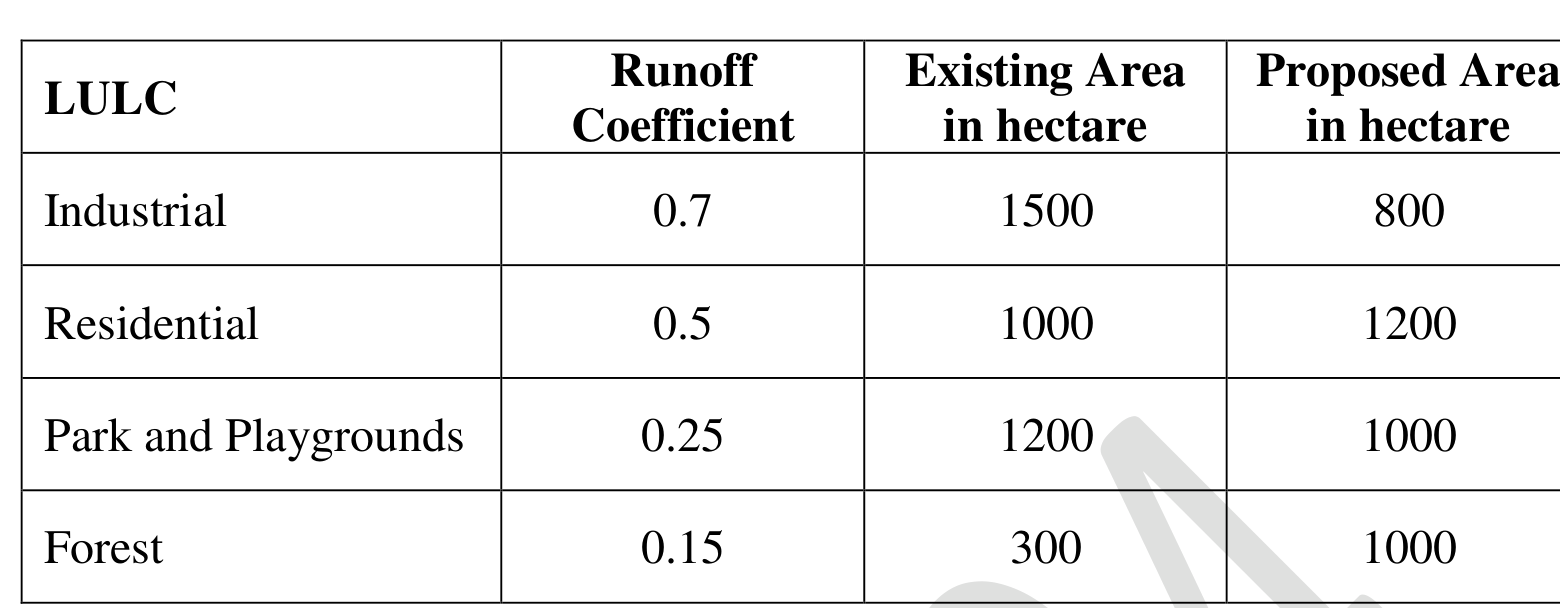
Considering a flat topography and zero additional runoff from the adjoining areas, the reduction in run-off generation for a 400 mm rainfall event in the industrial town for the proposed intervention, in cubic meters, is _____×10⁶ (rounded off to two decimal places).
Answer: 1.30 to 1.38
Step 1: Existing runoff coefficient × area:
– Industrial: 0.7 × 1500 = 1050
– Residential: 0.5 × 1000 = 500
– Parks: 0.25 × 1200 = 300
– Forest: 0.15 × 300 = 45
– Total existing = 1895
Step 2: Proposed runoff:
– Industrial: 0.7 × 800 = 560
– Residential: 0.5 × 1200 = 600
– Parks: 0.25 × 1000 = 250
– Forest: 0.15 × 1000 = 150
– Total proposed = 1560
Step 3: Reduction in weighted coefficient = 1895 − 1560 = 335
Step 4: For 400 mm rainfall on 335 hectares:
Volume = 335 ha × 10,000 m²/ha × 0.4 m = 1,340,000 m³ = 1.34 × 10⁶ m³
(Answer range: 1.30 to 1.38 × 10⁶)
Q48 — A real estate developer is developing a township on a PPP mode. The total area of the site is 2.672 hectares with an all
Question
A real estate developer is developing a township on a PPP mode. The total area of the site is 2.672 hectares with an allowable FAR of 2.25, of which 20% is earmarked for MIG category. The gross area of each MIG unit including common areas and services is 72 m². Assuming super built up area to be same as FAR, the maximum number of MIG apartments that can be constructed is __ (in integer).
Answer: 167
Step 1: Total site area = 2.672 ha = 26,720 m²
Step 2: Total built-up area = FAR × site area = 2.25 × 26,720 = 60,120 m²
Step 3: MIG allocation = 20% of 60,120 = 12,024 m²
Step 4: Number of MIG apartments = 12,024/72 = 167
Related lessonL5.7 — Housing Policies and National Programs →
Q49 — A municipal town requires a volume of 70,000 m³ compacted solid waste to fill a low lying land. The city has a total of
Question
A municipal town requires a volume of 70,000 m³ compacted solid waste to fill a low lying land. The city has a total of 10,000 households.
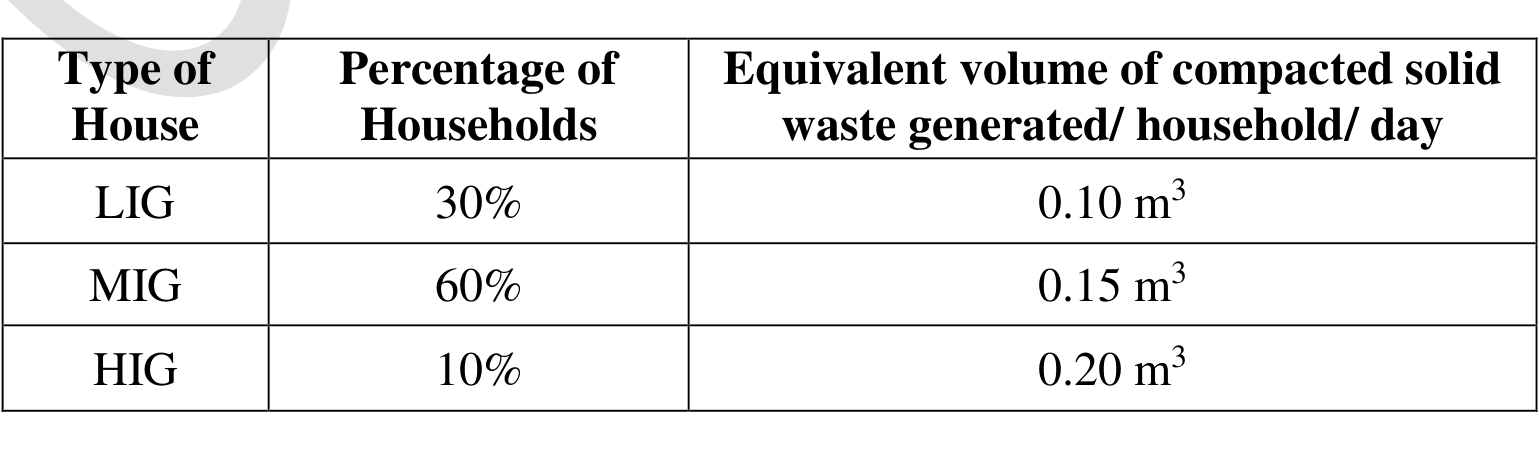
Using the information as shown in the Table above, the estimated minimum number of days required to fill the low lying land is __ (in integer).
Answer: 50
Step 1: Daily compacted waste generation:
– LIG: 3000 × 0.10 = 300 m³
– MIG: 6000 × 0.15 = 900 m³
– HIG: 1000 × 0.20 = 200 m³
– Total daily = 1,400 m³
Step 2: Days to fill = 70,000/1,400 = 50 days
Related lessonL5.5 — Settlement Classification and Urban Morphology →
Q50 — Rose window is a characteristic feature of
Question
Rose window is a characteristic feature of
Answer: C — Notre-Dame, Paris
Rose windows are large circular stained-glass windows characteristic of Gothic cathedrals, most famously Notre-Dame de Paris (C).
❌ Why Not Others: (A) Karnak = Egyptian hypostyle hall with clerestory. (B) Baalbek = Roman temple with Corinthian columns. (D) Humayun’s Tomb = Mughal architecture with pishtaq and dome.
💡 Memory Tip: Rose window = Gothic = Notre-Dame. Think: roses grow in Paris gardens.
Related lessonL7.3 — Medieval Architecture (Byzantine, Romanesque, Gothic) →
Q51 — The schematic diagram of a unitary air-conditioner operating in cooling mode, is shown in the following Figure. The comp
Question
The schematic diagram of a unitary air-conditioner operating in cooling mode, is shown in the following Figure. The component P marked in the figure represents
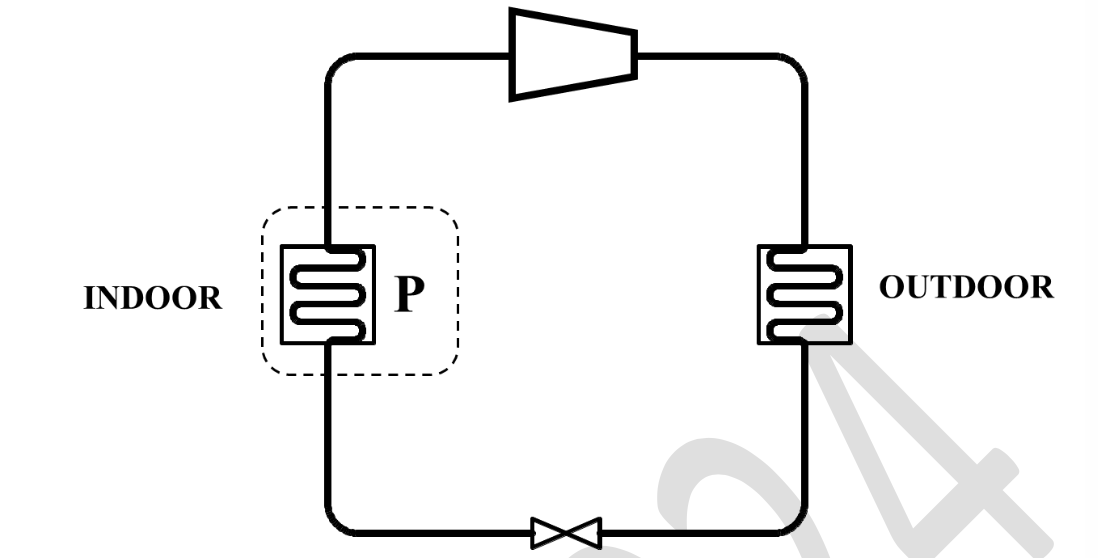
Answer: B — Evaporator
In a unitary AC operating in cooling mode, the indoor unit contains the evaporator (which absorbs heat from the room air). Component P is in the indoor unit = Evaporator (B).
❌ Why Not Others: (A) Condenser is in the outdoor unit. (C) Compressor is in the outdoor unit. (D) Expansion valve is between condenser and evaporator.
💡 Memory Tip: Indoor = Evaporator (absorbs heat). Outdoor = Condenser (rejects heat) + Compressor. The refrigerant evaporates inside (cooling) and condenses outside (heat rejection).
Q52 — Titan Integrity Campus, Bengaluru is designed by
Question
Titan Integrity Campus, Bengaluru is designed by
Answer: B — Sanjay Mohe
Titan Integrity Campus, Bengaluru was designed by Sanjay Mohe (B) of Mindspace Architects.
❌ Why Not Others: (A) Christopher Benninger designed India House, Mahindra United World College. (C) Raj Rewal designed Hall of Nations, Asian Games Village. (D) Anant Raje designed IIM Ahmedabad extensions.
Related lessonL7.6 — Post-Modern and Contemporary Architecture →
Q53 — With reference to the Figure below, which of the following labelling is/are correct?
Question
With reference to the Figure below, which of the following labelling is/are correct?
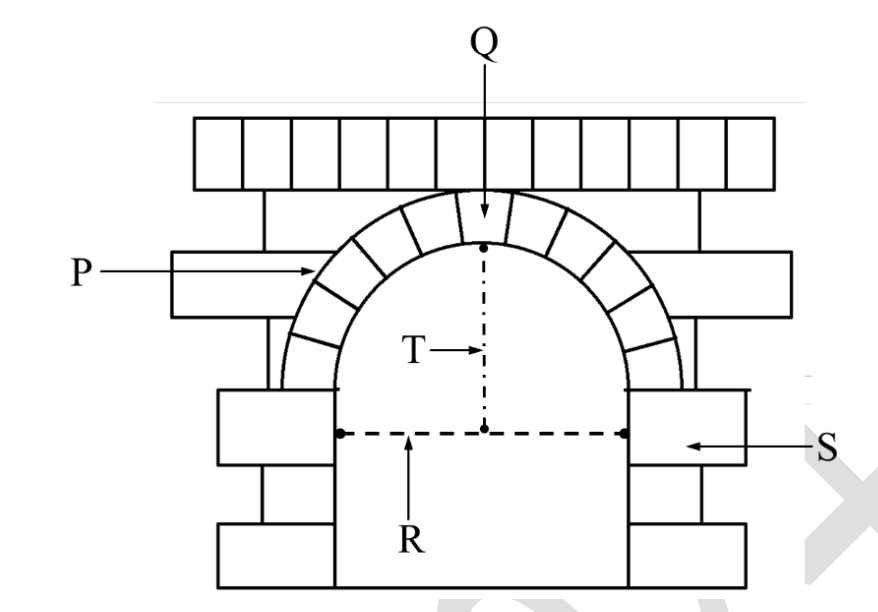
Answer: A, B
Arch nomenclature from the figure:
– (A) P = Extrados (outer curve), Q = Key (top voussoir), R = Span ✓
– (B) Q = Key, S = Abutment (support), T = Rise (height) ✓
– (C) P = Abutment ✗ (P is the outer curve, not the support)
– (D) S = Span ✗ (S is the abutment, not the span)
❌ Why Not Others: (C) P is Extrados (outer curve), not Abutment. (D) S is Abutment, not Span.
💡 Memory Tip: Extrados = Extra (outer). Intrados = Inner curve. Key = topmost stone (locks the arch). Rise = vertical height. Span = horizontal distance. Abutment = support at ends.
Related lessonL1.3 — Architectural Graphics and Drawing Systems →
Q54 — Which of the following buildings has/have pendentives as a structural element?
Question
Which of the following buildings has/have pendentives as a structural element?
Answer: A, D
Pendentives are curved triangular supports that transition from a square base to a circular dome:
– (A) St. Mark’s Basilica, Venice ✓ (famous pendentive domes, Byzantine architecture)
– (D) Hagia Irene, Istanbul ✓ (Byzantine church with pendentives)
– (B) Westminster Cathedral ✗ (uses Byzantine-style piers, not true pendentives)
– (C) Dilwara Temple ✗ (uses corbelled domes on pillars, not pendentives)
❌ Why Not Others: (B) Westminster Cathedral uses piers, not true pendentives. (C) Dilwara Temple uses corbelled domes on pillars, not pendentives.
📌 Quick Fact: The Hagia Sophia (Istanbul) is the most famous example of pendentive construction, allowing a massive dome to sit on a square base.
Related lessonL7.3 — Medieval Architecture (Byzantine, Romanesque, Gothic) →
Q55 — Polytetrafluroethylene (PTFE) coated fiberglass has been used as a roofing membrane in
Question
Polytetrafluroethylene (PTFE) coated fiberglass has been used as a roofing membrane in
Answer: A — Jawaharlal Nehru Stadium
PTFE-coated fiberglass (Teflon-coated) is a tensile membrane material. The Jawaharlal Nehru Stadium, New Delhi (renovated for 2010 Commonwealth Games) uses PTFE fiberglass membrane roofing (A).
❌ Why Not Others: (B) Eden Gardens = conventional concrete/metal roof. (C) MCG = metal roof. (D) Beijing National Stadium = steel lattice structure (Bird’s Nest), not PTFE membrane.
📌 Quick Fact: PTFE membranes have 25+ year lifespan, are self-cleaning, and transmit 10-15% natural light.
Related lessonL2.1 — Building Materials — Properties and Selection →
Q56 — A non-stop express elevator directly connects the observatory level at 80th floor of a tower with the podium at 2nd floo
Question
A non-stop express elevator directly connects the observatory level at 80th floor of a tower with the podium at 2nd floor level. The tower has a uniform floor-floor height of 4 m. The elevator attains a maximum speed of 8 m/s. Assume 2 m/s² as net vertical acceleration and net vertical deceleration (incorporating gravity). If the elevator starts from a state of rest from the podium, the time taken to reach the observatory, in seconds, is __ (rounded off to one decimal place).
Answer: 42 to 44
Step 1: Height = (80 − 2) × 4 = 312 m
Step 2: Maximum speed v = 8 m/s, acceleration a = 2 m/s²
Step 3: Time to reach max speed: t₁ = v/a = 8/2 = 4 s
Step 4: Distance during acceleration: s₁ = v²/2a = 64/4 = 16 m. Same distance for deceleration: s₂ = 16 m.
Step 5: Distance at constant speed: s₃ = 312 − 16 − 16 = 280 m
Step 6: Time at constant speed: t₂ = 280/8 = 35 s
Step 7: Total time = 4 + 35 + 4 = 43 s (range: 42-44)
💡 Memory Tip: For elevator problems: total time = acceleration time + constant speed time + deceleration time.
Related lessonL6.4 — Electrical Systems and Vertical Transportation →
Q57 — Match the elements in Group–I with the corresponding religious buildings in Group–II.
Question
Match the elements in Group–I with the corresponding religious buildings in Group–II.
| Group–I | Group–II |
|---|---|
| (P) Bell capital | (1) Mosque |
| (Q) Mehrab | (2) Hindu Temple |
| (R) Gopuram | (3) Greek Temple |
| (S) Pediment | (4) Romanesque Church |
| (5) Egyptian Temple |
Answer: A — P-5, Q-1, R-2, S-3
| Element | Building |
|---|---|
| (P) Bell capital | (5) Egyptian Temple |
| (Q) Mehrab | (1) Mosque |
| (R) Gopuram | (2) Hindu Temple |
| (S) Pediment | (3) Greek Temple |
Answer: P-5, Q-1, R-2, S-3 = Option A
💡 Memory Tip: Bell capital = Egyptian (papyrus/bell-shaped). Mehrab = Mosque (prayer niche). Gopuram = Hindu temple gateway. Pediment = Greek triangular gable.
Related lessonL7.7 — Indian Architecture — Classical and Medieval →
Q58 — Match the museums in Group–I with their architects in Group–II.
Question
Match the museums in Group–I with their architects in Group–II.
| Group–I | Group–II |
|---|---|
| (P) Indira Gandhi Rashtriya Manav Sangrahalaya, Bhopal | (1) Charles Correa |
| (Q) Bihar Museum, Patna | (2) Ram Sharma |
| (R) Gandhi Memorial Museum, Ahmedabad | (3) Romi Khosla |
| (S) Museum of Art and Photography, Bengaluru | (4) Soumitro Ghosh & Nisha Mathew |
| (5) Fumihiko Maki |
Answer: D — P-2, Q-5, R-1, S-4
| Museum | Architect |
|---|---|
| (P) IG Rastriya Manav Sangrahalaya, Bhopal | (2) Ram Sharma |
| (Q) Bihar Museum, Patna | (5) Fumihiko Maki |
| (R) Gandhi Memorial Museum, Ahmedabad | (1) Charles Correa |
| (S) MAP Bengaluru | (4) Soumitro Ghosh & Nisha Mathew |
Answer: P-2, Q-5, R-1, S-4 = Option D
📌 Quick Fact: Charles Correa designed multiple museums including the Bharat Bhavan, Bhopal and the Vidhan Sabha, Bhopal. Fumihiko Maki (Pritzker 1993) designed Bihar Museum.
Related lessonL7.2 — Classical Architecture (Greek and Roman) →
Q59 — Match the specially shaped bricks in Group–I with their corresponding nomenclature in Group–II.
Question
Match the specially shaped bricks in Group–I with their corresponding nomenclature in Group–II.
| Group–I | Group–II |
|---|---|
(P) 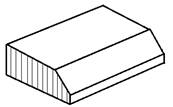 |
(1) Plinth Header |
(Q) 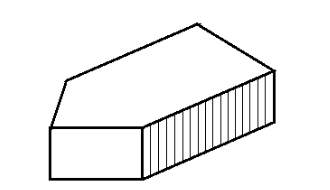 |
(2) Bird’s mouth |
(R) 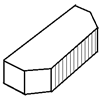 |
(3) Squint |
(S) 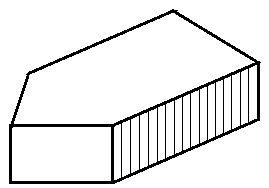 |
(4) Double cant |
| (5) Plinth stretcher |
Answer: A — P-4, Q-3, R-5, S-1
Special brick shapes matched by their images:
– (P) Double cant (4) — brick with two angled cuts
– (Q) Squint (3) — angled brick for corners
– (R) Plinth stretcher (5) — stretcher with plinth notch
– (S) Plinth header (1) — header with plinth notch
Answer: P-4, Q-3, R-5, S-1 = Option A
💡 Memory Tip: Cant = angled cut. Double cant = two angled cuts. Squint = angled for non-90° corners. Plinth bricks have a notch for the plinth course.
Related lessonL2.1 — Building Materials — Properties and Selection →
Q60 — Which of the following statements is/are correct?
Question
Which of the following statements is/are correct?
Answer: A, C, D
- (A) LPD unit = W/m² ✓ (power per unit area)
- (B) LPD unit = cd/m² ✗ (cd/m² is luminance, not power density)
- (C) Sound Power unit = W (Watts) ✓
- (D) EPI unit = kWh/m²/year ✓ (energy per area per year)
❌ Why Not Others: (B) cd/m² is the unit of luminance, not Lighting Power Density. LPD is measured in W/m².
💡 Memory Tip: Lighting Power Density = Watts per m² (not luminance which is cd/m²). Energy Performance Index = kWh/m²/year.
Related lessonL9.6 — Sustainability Systems and Intelligent Buildings →
Q61 — Which of the following statements is/are correct?
Question
Which of the following statements is/are correct?
Answer: A, B, D
- (A) Kath-kuni = alternating layers of stone and timber ✓ (Himachal Pradesh traditional construction)
- (B) Nālukettu = traditional Kerala house with central courtyard ✓
- (C) Ikra = bamboo/wattle and daub construction (NOT stone masonry with flat roof) ✗
- (D) Bhunga = circular plan mud house ✓ (Kutch, Gujarat)
❌ Why Not Others: (C) Ikra is a lightweight bamboo/wattle-and-daub construction from Assam, not stone masonry with a flat roof.
📌 Quick Fact: Ikra houses in Assam use bamboo woven walls plastered with mud — lightweight and earthquake-resistant. Kath-kuni’s alternating layers provide flexibility during seismic events.
Related lessonL9.6 — Sustainability Systems and Intelligent Buildings →
Q62 — A 5 m long Aluminium tie rod of cross-section 0.20 m × 0.04 m is subjected to a tensile force induced by its self-weight
Question
A 5 m long Aluminium tie rod of cross-section 0.20 m × 0.04 m is subjected to a tensile force induced by its self-weight of 21.20 kg/m considering gravitational acceleration of 10 m/s². If tensile Young’s modulus of Aluminium is 70,000 MPa, the maximum tensile strain in the rod is __×10⁻⁶ (rounded off to two decimal places).
Answer: 1.80 to 1.90
Step 1: Self-weight per meter = 21.20 kg/m. Total weight of 5 m rod = 21.20 × 5 = 106 kg.
Step 2: Maximum tensile force (at top, where entire weight acts) = 106 × 10 = 1060 N.
Step 3: Cross-sectional area = 0.20 × 0.04 = 0.008 m².
Step 4: Stress = Force/Area = 1060/0.008 = 132,500 Pa = 0.1325 MPa.
Step 5: Strain = Stress/E = 0.1325/70,000 = 1.893 × 10⁻⁶
(Answer range: 1.80 to 1.90 × 10⁻⁶)
Related lessonL1.3 — Architectural Graphics and Drawing Systems →
Q63 — The following Figure shows the excavation plan of a two room structure, where the trench has a uniform width of 1.10 met
Question
The following Figure shows the excavation plan of a two room structure, where the trench has a uniform width of 1.10 meters. If the cumulative centre line length of the trench is 41.10 meters and the required depth of concrete to be poured is 0.30 meters, the volume of concrete in foundation, in cubic meters, will be __(rounded off to two decimal places).
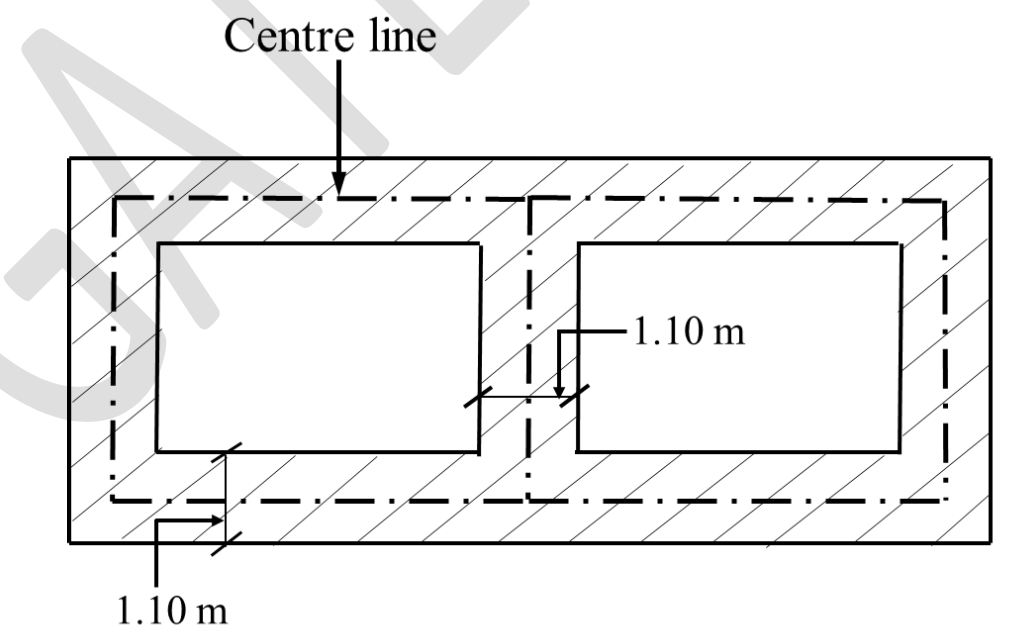
Answer: 13.20
The trench plan has an outer rectangle and one partition, so the partition trench meets the outer trench at two T-junctions. At each T-junction the centre-line length is reduced by half the trench width.
Deduction = 2 × (1.10 ÷ 2) = 1.10 m
Corrected centre-line length = 41.10 − 1.10 = 40.00 m
Volume = 40.00 × 1.10 × 0.30 = 13.20 m³
The official answer is 13.20 m³. (Using 41.10 m with no deduction gives 13.563 m³, which is not the answer.)
💡 Memory Tip: Centre-line method: V = L × w × d. Deduct half the width at each T-junction, one full width at each cross (+) junction, nothing at plain corners.
Q64 — The decay of sound in an enclosed lecture hall of volume 3500 m³ is shown in the Figure below. The sound source is switc
Question
The decay of sound in an enclosed lecture hall of volume 3500 m³ is shown in the Figure below. The sound source is switched off at point P. Using the Reverberation Time (RT60) obtained from the figure, the calculated total sound absorption of the hall, in Sabins, is __ (rounded off to the nearest integer).
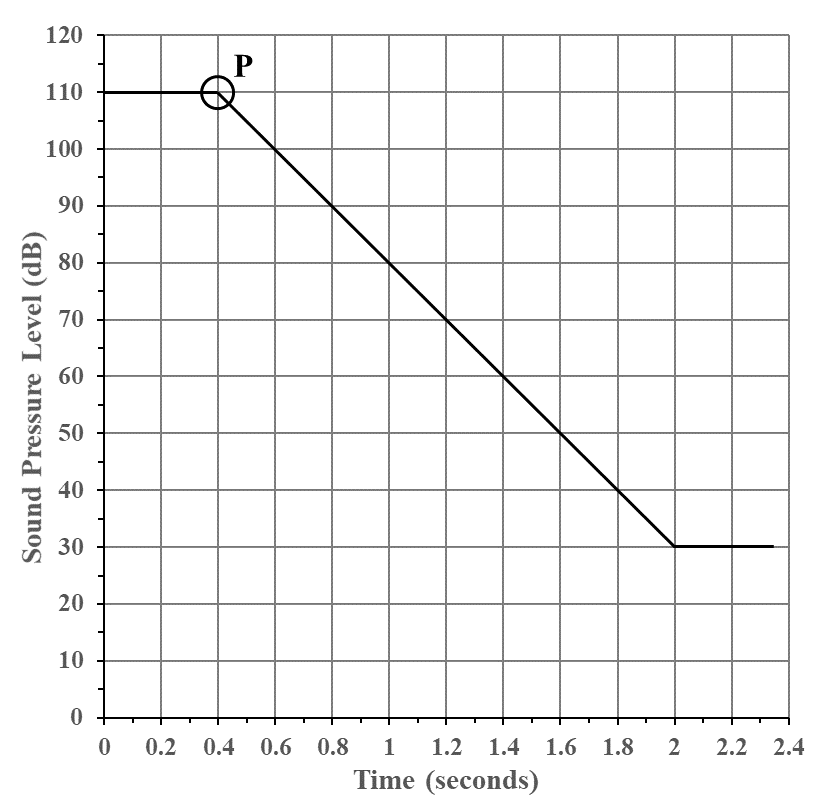
Answer: 430 to 510
Sabine’s formula: RT₆₀ = 0.161 × V / A
Where V = volume (m³), A = total absorption (Sabins)
From the figure, RT₆₀ ≈ 1.1 to 1.3 seconds (reading the decay curve)
A = 0.161 × 3500 / RT₆₀
For RT₆₀ = 1.1 s: A = 563.5/1.1 = 512 Sabins
For RT₆₀ = 1.3 s: A = 563.5/1.3 = 434 Sabins
Answer range: 430 to 510 Sabins
💡 Memory Tip: Sabine’s formula: RT₆₀ = 0.161V/A. Longer reverberation = less absorption. Typical RT₆₀ for lecture halls = 0.8-1.2 s.
Q65 — A 2 TR window air-conditioner of Energy Efficiency Ratio (EER) 3.1 is catering to a room of volume 40 m³. The air-condit
Question
A 2 TR window air-conditioner of Energy Efficiency Ratio (EER) 3.1 is catering to a room of volume 40 m³. The air-conditioner is operational for 600 hours during summer on cooling mode. The compressor is also operational for the complete duration. The total energy consumption of the air-conditioner during the above mentioned period, in kWh, is __ (rounded off to nearest integer).
Answer: 1350 to 1394
Step 1: 2 TR = 2 × 3.517 kW = 7.034 kW cooling capacity
Step 2: EER = Cooling capacity / Power input → Power input = 7.034/3.1 = 2.269 kW
Step 3: Total energy = Power × Time = 2.269 × 600 = 1361.6 kWh
(Answer range: 1350-1394 kWh)
💡 Memory Tip: 1 TR (Ton of Refrigeration) = 3.517 kW. EER = cooling output/electrical input. Higher EER = more efficient.
Q66 — Which of the following aims is set under the SVAMITVA scheme of the Ministry of Panchayati Raj, Government of India?
Question
Which of the following aims is set under the SVAMITVA scheme of the Ministry of Panchayati Raj, Government of India?
Answer: C — SVAMITVA property mapping
SVAMITVA (Survey of Villages Abadi and Mapping with Improvised Technology in Village Areas) aims to establish clear ownership of property in rural inhabited (Abadi) areas by mapping land parcels using drones and GIS technology (C).
❌ Why Not Others: (A) = Jal Jeevan Mission. (B) = MGNREGA. (D) = NRLM (National Rural Livelihood Mission).
💡 Memory Tip: SVAMITVA = SVA (own) + MITVA (friend/property) = mapping YOUR property in rural areas.
Related lessonL12.8 — Rural and Urban Infrastructure Networks →
Q67 — Mass Rapid Transit System is a
Question
Mass Rapid Transit System is a
Answer: A — Fixed Route and Fixed Schedule
Mass Rapid Transit System (MRTS) operates on a Fixed Route (predetermined track/alignment) with a Fixed Schedule (timetabled service) (A).
❌ Why Not Others: (B) Fixed route + flexible schedule = bus service. (C) Flexible route + fixed schedule = demand-responsive transit. (D) Flexible both = paratransit/taxi.
Q68 — Which of the following initiatives of the Government of India is also known as the National Master Plan for Multi-modal
Question
Which of the following initiatives of the Government of India is also known as the National Master Plan for Multi-modal Connectivity?
Answer: A — PM Gati Shakti
PM Gati Shakti = National Master Plan for Multi-modal Connectivity (A). Launched in 2021, it integrates infrastructure projects across ministries for coordinated development.
❌ Why Not Others: (B) Bharatmala = highway development. (C) Parvatmala = ropeway development. (D) Sagarmala = port-led development.
💡 Memory Tip: Gati Shakti = Gati (speed/movement) + Shakti (power) = powerful connectivity across all modes.
Related lessonL12.8 — Rural and Urban Infrastructure Networks →
Q69 — With reference to the Speed-Density diagram given below, which of the following statements is/are correct?
Question
With reference to the Speed-Density diagram given below, which of the following statements is/are correct?
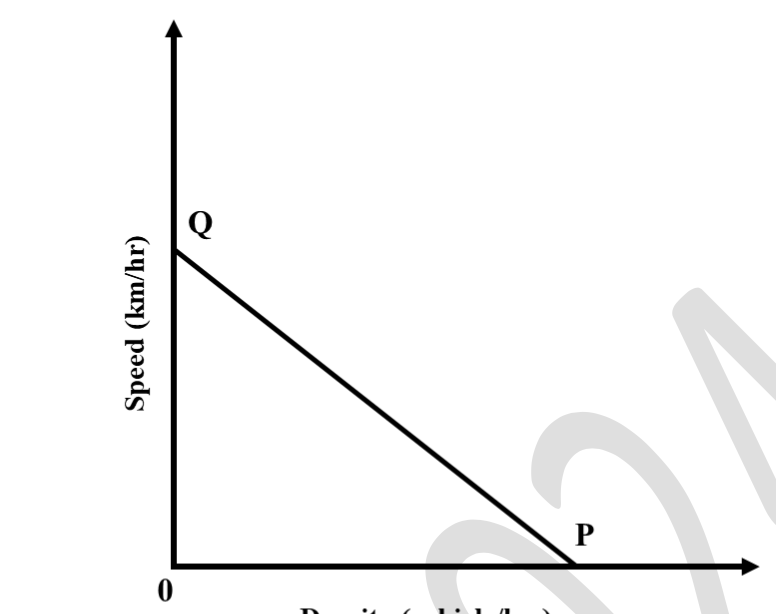
Answer: B, C
In the speed-density diagram:
– (B) Point P at maximum density = Jam Density ✓ (where speed = 0, density is maximum)
– (C) Point Q at y-intercept = Space Mean Speed for Free Flow ✓ (speed when density = 0)
– (A) Maximum flow occurs at the peak of the flow-density curve, NOT at P ✗
– (D) Point Q represents free-flow speed, not Time Mean Speed specifically ✗
❌ Why Not Others: (A) Point P is at maximum density (jam), not maximum flow. (D) Q represents Space Mean Speed for free flow, not Time Mean Speed.
💡 Memory Tip: In speed-density: left end (Q) = free flow, right end (P) = jam. In flow-density: peak = capacity, left end = free flow, right end = jam.
Related lessonL12.6 — Traffic Engineering and Transport Planning (Advanced) →
Q70 — Which of the following statements correctly represent(s) the Demographic dividend of a country?
Question
Which of the following statements correctly represent(s) the Demographic dividend of a country?
Answer: A, C
Demographic dividend:
– (A) Working age population > dependent population ✓
– (C) Demographic dividend demands more job creation ✓
– (B) This is the opposite (dependency ratio > working age) ✗
– (D) Demographic dividend CAN lead to disaster if jobs aren’t created ✗
❌ Why Not Others: (B) Reverses the definition of demographic dividend. (D) Without adequate job creation, demographic dividend can turn into “demographic disaster.”
📌 Quick Fact: India’s demographic dividend window is expected to last until 2055-2060. Without adequate job creation, it can turn into a “demographic disaster” with large unemployed youth populations.
Q71 — As per the URDPFI Guidelines 2015, choose the option(s) which indicate(s) the appropriate hierarchy of plans from higher
Question
As per the URDPFI Guidelines 2015, choose the option(s) which indicate(s) the appropriate hierarchy of plans from higher to lower order.
Answer: A, B
URDPFI 2015 hierarchy (higher to lower):
– (A) Perspective Plan > Development Plan > Local Area Plan ✓
– (B) Development Plan > Special Purpose Plan > Annual Plan ✓
– (C) Local Area Plan is lower than Development Plan ✗ (reversed order)
– (D) Special Purpose Plan is not above Perspective Plan ✗
❌ Why Not Others: (C) Local Area Plan is below Development Plan, not above. (D) Special Purpose Plan is at the Development Plan level, not above Perspective Plan.
💡 Memory Tip: URDPFI hierarchy: Perspective (20-25 yrs) > Development (10-15 yrs) > Local Area (5-7 yrs) > Annual (1 yr). Special Purpose Plans are at the Development Plan level.
Q72 — In 2021, a city survey report revealed a sex ratio of 930 with an estimated increase of 2.16% over the next 20 years. In
Question
In 2021, a city survey report revealed a sex ratio of 930 with an estimated increase of 2.16% over the next 20 years. In 2041, the total population of the city is projected to be 15,00,000. The estimated female population in the year 2041 will be __ (in integer).
Answer: 730500 to 731200
Step 1: Sex ratio 2021 = 930 (females per 1000 males).
Step 2: Increase of 2.16% over 20 years. New sex ratio = 930 × 1.0216 ≈ 950.09.
Step 3: Female fraction = 950.09/(1000 + 950.09) = 950.09/1950.09 = 0.4872.
Step 4: Female population = 15,00,000 × 0.4872 = 730,800
(Answer range: 730,500 to 731,200)
Q73 — Match the terms in Group–I with their descriptions in Group–II.
Question
Match the terms in Group–I with their descriptions in Group–II.
| Group–I | Group–II |
|---|---|
| (P) Landfill site | (1) Development on previously developed site |
| (Q) Greenfield development | (2) Land to dispose solid waste |
| (R) Green Belt | (3) Development on previously undeveloped land |
| (S) Brownfield development | (4) Policy to protect livestock |
| (5) A buffer to control urban development |
Answer: C — P-2, Q-3, R-5, S-1
| Term | Description |
|---|---|
| (P) Landfill site | (2) Land to dispose solid waste |
| (Q) Greenfield development | (3) Development on previously undeveloped land |
| (R) Green Belt | (5) A buffer to control urban development |
| (S) Brownfield development | (1) Development on previously developed site |
Answer: P-2, Q-3, R-5, S-1 = Option C
💡 Memory Tip: Greenfield = Green (undeveloped) land. Brownfield = previously developed (industrial contamination). Green Belt = green barrier against urban sprawl.
Related lessonL5.5 — Settlement Classification and Urban Morphology →
Q74 — Match the following illustrations in Group–I with their corresponding concepts in Group–II.
Question
Match the following illustrations in Group–I with their corresponding concepts in Group–II.
| Group–I | Group–II |
|---|---|
(P) 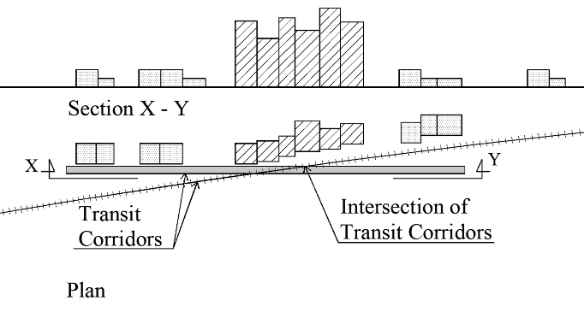 |
(1) Figure Ground Relationship |
(Q) 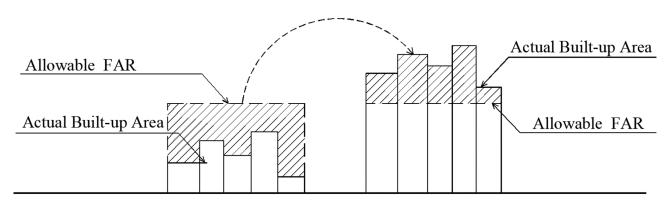 |
(2) Town Planning Scheme (TPS) |
(R)  |
(3) Transit Oriented Development (TOD) |
(S) 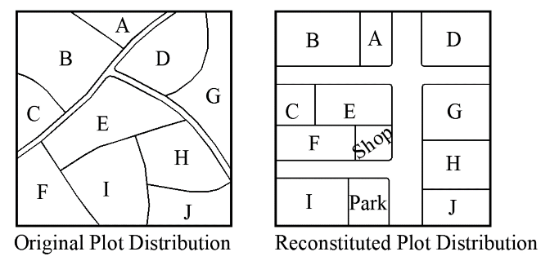 |
(4) Transferable Development Rights (TDR) |
| (5) Cul-de-Sac |
Answer: A — P-3, Q-4, R-1, S-2
From the planning illustrations:
– (P) Transit Oriented Development (3) — mixed-use near transit hub
– (Q) Transferable Development Rights (4) — density transfer mechanism
– (R) Figure Ground Relationship (1) — built/unbuilt spatial pattern
– (S) Town Planning Scheme (2) — land pooling and redistribution
Answer: P-3, Q-4, R-1, S-2 = Option A
Q75 — Match the following planning theories/concepts in Group–I with their corresponding proponents in Group–II.
Question
Match the following planning theories/concepts in Group–I with their corresponding proponents in Group–II.
| Group–I | Group–II |
|---|---|
| (P) Valley Section | (1) McGee and Gemburg |
| (Q) Third Place Theory | (2) Oscar Newman |
| (R) Defensible Space | (3) Ray Oldenberg |
| (S) Desakota Model | (4) Patrick Geddes |
| (5) C. A. Doxiadis |
Answer: A — P-4, Q-3, R-2, S-1
| Theory/Concept | Proponent |
|---|---|
| (P) Valley Section | (4) Patrick Geddes |
| (Q) Third Place Theory | (3) Ray Oldenberg |
| (R) Defensible Space | (2) Oscar Newman |
| (S) Desakota Model | (1) McGee and Gemburg |
Answer: P-4, Q-3, R-2, S-1 = Option A
💡 Memory Tip: Geddes = Valley Section (Valley = Geddes’ survey approach). Oldenberg = 3rd Place (Third = 3). Newman = Defensible Space (Newman defends space). McGee = Desakota (Indonesian term, McGee studied SE Asian urbanization).
Q76 — Which of the following methods is/are used in traffic survey to measure the Running Speed and Journey Speed?
Question
Which of the following methods is/are used in traffic survey to measure the Running Speed and Journey Speed?
Answer: A, B, C
Traffic survey methods for Running Speed and Journey Speed:
– (A) Moving Observer Method ✓ (observer travels with and against traffic)
– (B) Registration Number Method ✓ (matching license plates at two points)
– (C) Elevated Observer Method ✓ (observing from overhead vantage points)
– (D) Hardy Cross Method ✗ (this is for water distribution network analysis, not traffic)
❌ Why Not Others: (D) Hardy Cross Method is used for analyzing water distribution networks, not for traffic speed surveys.
Related lessonL12.6 — Traffic Engineering and Transport Planning (Advanced) →
Q77 — In the context of regional planning, which of the following terms represent(s) a region?
Question
In the context of regional planning, which of the following terms represent(s) a region?
Answer: A, B, D
Types of regions in regional planning:
– (A) Formal region ✓ (defined by uniform criteria like administrative boundaries)
– (B) Functional region ✓ (defined by functional interactions like commuter zones)
– (C) Isometric ✗ (not a type of region in planning)
– (D) Planning region ✓ (defined for planning purposes)
❌ Why Not Others: (C) Isometric is a term from geometry/cartography, not a type of region in regional planning.
Q78 — In a one-way single lane traffic stream, the observed average time headway is 2.5 seconds. The traffic flow of the above
Question
In a one-way single lane traffic stream, the observed average time headway is 2.5 seconds. The traffic flow of the above mentioned lane, in vehicle/hr, is __(in integer).
Answer: 1440
Traffic flow = 3600 / average time headway = 3600 / 2.5 = 1440 vehicles/hr
💡 Memory Tip: Flow (veh/hr) = 3600 / headway (seconds). This is the fundamental relationship between time headway and flow.
Related lessonL12.6 — Traffic Engineering and Transport Planning (Advanced) →
Q79 — The demand of a EcoCity theme park is estimated as P = 1500 − 7.5Q, where P (in Indian Rupees) is the price of a ticket
Question
The demand of a EcoCity theme park is estimated as P = 1500 − 7.5Q, where P (in Indian Rupees) is the price of a ticket for single entry, and Q (in integer) is the number of tickets sold per hour. The maximum revenue per hour along the demand curve, in Indian Rupees, is __(in integer).
Answer: 75000
Step 1: Revenue R = P × Q = (1500 − 7.5Q) × Q = 1500Q − 7.5Q²
Step 2: Maximum revenue when dR/dQ = 0: 1500 − 15Q = 0 → Q = 100
Step 3: R_max = 1500(100) − 7.5(100²) = 150,000 − 75,000 = 75,000
💡 Memory Tip: Maximum revenue occurs at Q* = −b/(2c) for demand P = a + bQ in R = aQ + bQ². Alternatively, max revenue = a²/(4|b|) = 1500²/(4×7.5) = 2,250,000/30 = 75,000.
Q80 — Labour supply and urban growth are represented in X and Y axis of the Figure below. Curve OP represents the relationship
Question
Labour supply and urban growth are represented in X and Y axis of the Figure below. Curve OP represents the relationship between labour supply and urban growth.
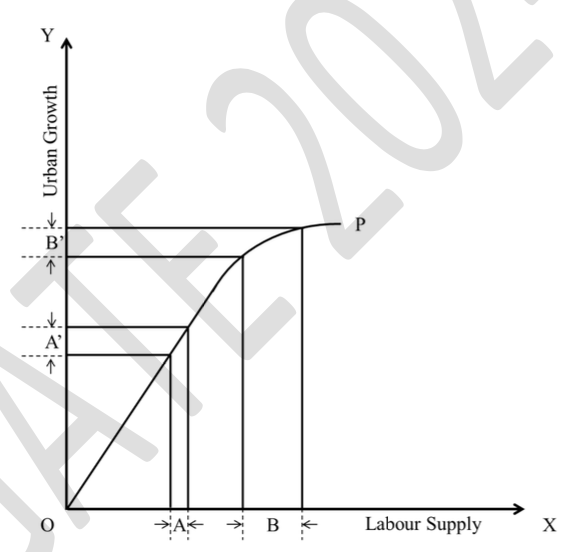
The ratios A:A’ and B:B’ are 1:1.2 and 3:1.2, respectively. If 6 units of labour is supplied in B, then the number of units of urban growth in B’ will be __ (rounded off to one decimal place).
Answer: 2.4
The ratio B:B’ = 3:1.2 means for every 3 units of labour, there are 1.2 units of urban growth.
If 6 units of labour in B, then urban growth in B’ = 6 × (1.2/3) = 6 × 0.4 = 2.4
Q81 — A city with a present population of 1,75,000 is expecting an annual population growth rate of 0.85%. In a traffic assess
Question
A city with a present population of 1,75,000 is expecting an annual population growth rate of 0.85%. In a traffic assessment study, the trip generation model has been developed as Y = 142 + 0.675X, where Y is the number of daily trips generated within the city and X is the population of the city. The number of daily trips to be generated within the city after 10 years is __(in integer).
Answer: 128500 to 128800
Step 1: Population after 10 years = 1,75,000 × (1.0085)¹⁰
(1.0085)¹⁰ ≈ 1.0877 (using compound growth)
Future population ≈ 1,75,000 × 1.0877 ≈ 1,90,348
Step 2: Y = 142 + 0.675 × X = 142 + 0.675 × 1,90,348 = 142 + 128,485 = 1,28,627
(Answer range: 1,28,500 to 1,28,800)
💡 Memory Tip: For population projection: P_future = P_present × (1 + r)ⁿ. Then substitute into the trip generation model.