
Transit Planner Skills: Working with Bus Ticket Data
If you enjoy maps, numbers and the question “why is this bus always full?”, service planning could suit you. City bus agencies now sit on millions of ticket records a month, and they need people who can turn those records into a better timetable. Here’s what the work looks like day to day, what interviewers check, and how to prove you can do it before your first job.
A week in the role
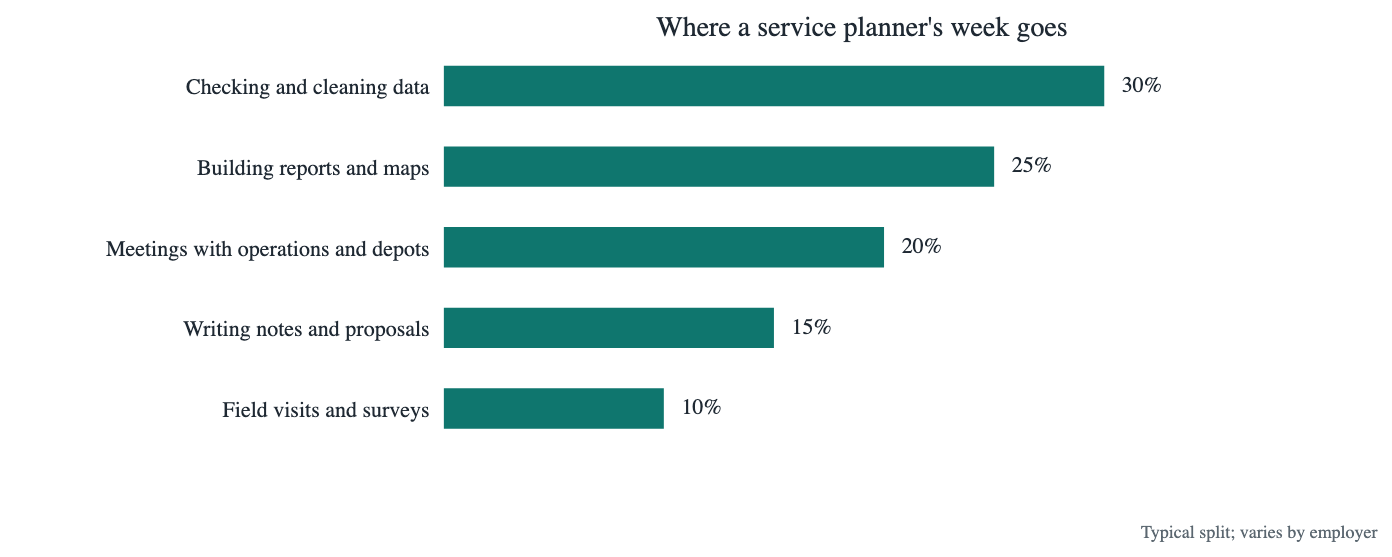
Most of your time goes on three things:
- Making the data trustworthy. Ticket machine records arrive with gaps, duplicates, refunds mixed into sales and route codes typed three different ways. You’ll find and fix these before anyone sees a number.
- Answering operational questions. Which routes are losing riders? Where are buses overcrowded at 8 a.m.? Which evening trips run nearly empty? You’ll answer with a table, a chart or a map.
- Recommending changes. A planner’s output is a decision: add two peak trips, turn every third bus back at the hospital, move a stop closer to the college gate.
What hiring managers screen for
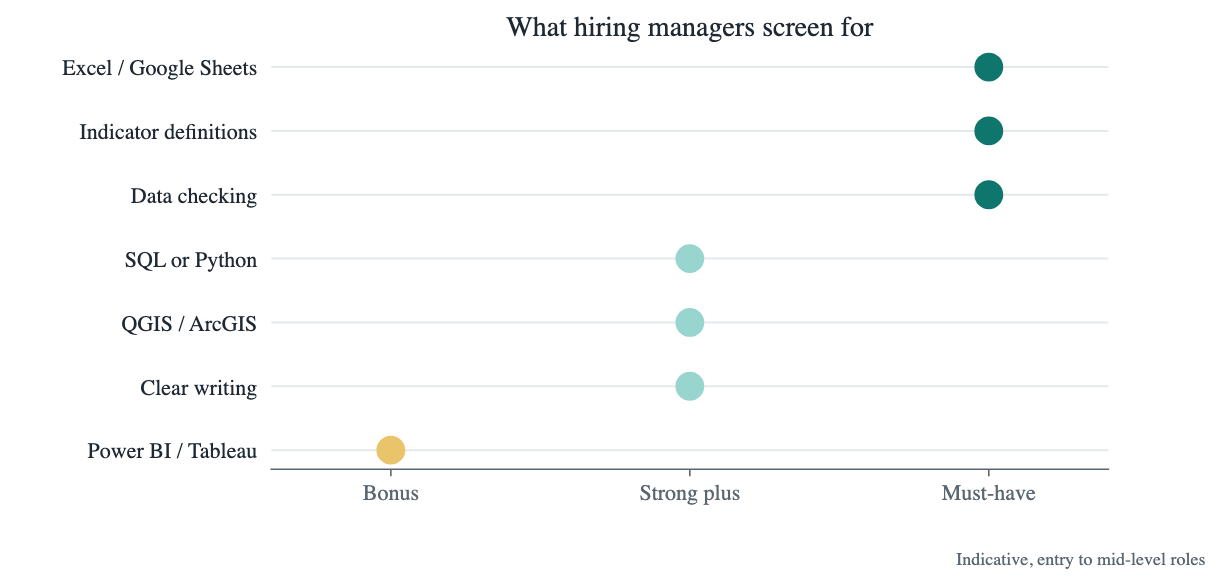
Must-have
- Spreadsheets at scale. Pivot tables on several lakh rows, lookups across tables, no hand-typed totals. If you can rebuild a monthly report from raw records in an afternoon, you’re ahead of most applicants.
- Indicator definitions. You should be able to write down how earnings per kilometre, load factor and headway are calculated, and explain why a monthly figure must be built from monthly totals, not by averaging daily percentages.
- Data checking. Before you report anything, you count rows, look for duplicates and blanks, and say what share of the data your number covers.
Strong plus
- SQL or Python (pandas). Once a city’s data passes a few million rows, scripts beat spreadsheets — and they make next month’s report a re-run, not a rebuild.
- QGIS or ArcGIS. Mapping stops and routes, drawing catchments, measuring distances along a corridor.
- Clear writing. A one-page note that a commissioner can act on in five minutes is worth more than a 40-page report.
Bonus
- Power BI or Tableau. Useful for recurring reports, but no substitute for knowing whether the numbers underneath are right.
Knowledge that makes you stand out
- How conductors issue tickets, how stage fares and passes work, and what that does to the records.
- The difference between what the agency supplies (bus-kilometres, seats) and what passengers consume (journeys, passenger-kilometres).
- Timetable basics: round-trip time, layover, how many buses a frequency needs.
- What ticket records can’t tell you — runs with no paying passengers, empty running to the depot, punctuality — and when to ask for GPS or schedule data instead.
Three portfolio projects that get you shortlisted
- A one-route performance note. Take any city’s published GTFS timetable for the supply side, invent a plausible day of passenger demand, and write a two-page note: what the route carries, where it’s crowded, one change you’d make.
- A crowding diagram. Build the on-board passenger count stop by stop for one trip and show where it peaks. Then test turning some trips back at that stop.
- A data-cleaning log. Download a messy public transport dataset and document every problem you found and how each would distort a headline figure. Interviewers love this because it’s exactly the job.
Next steps
Ready for interviews? Work through 15 transit KPI interview questions with model answers. Still deciding on the field? Read our guide to public transport planning careers in India. For the definitions and the MoHUA and TCQSM cut-offs, see bus transit terms and benchmarks.
FAQ
Do I need to know coding to get hired?
Not for most entry roles — strong spreadsheet skills are enough to start. Learning SQL or Python within your first year will open up analyst and senior roles.
I’m an architect. Can I move into this work?
Yes. Architects often bring strong mapping and presentation skills. Add a short GIS course and practise the indicator definitions, and you’ll be competitive for junior planner roles.
What should my CV highlight?
Projects and the decision each one supported. “Showed that 6 evening trips carried under 10 riders each; proposal adopted” beats a list of software.